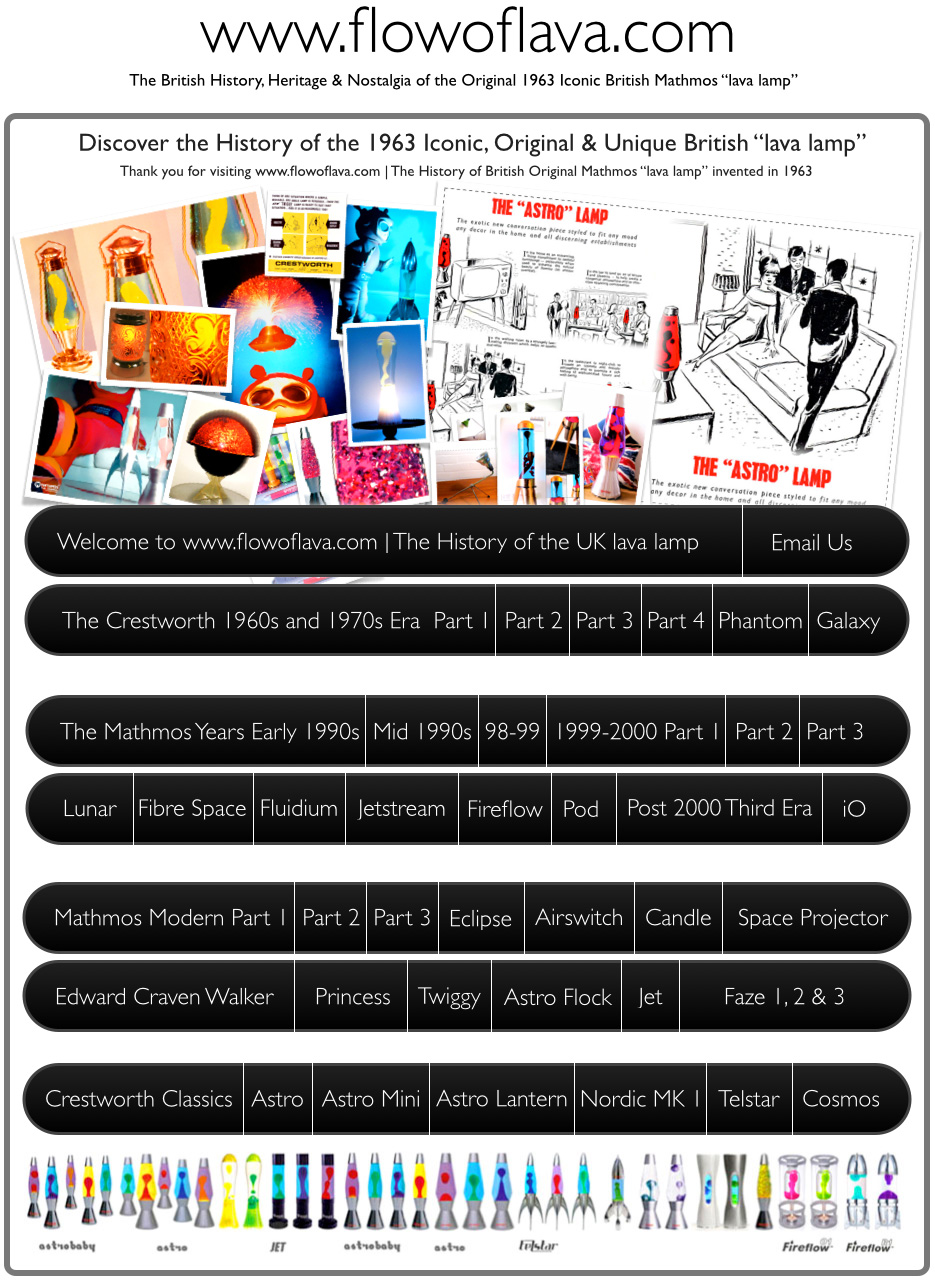
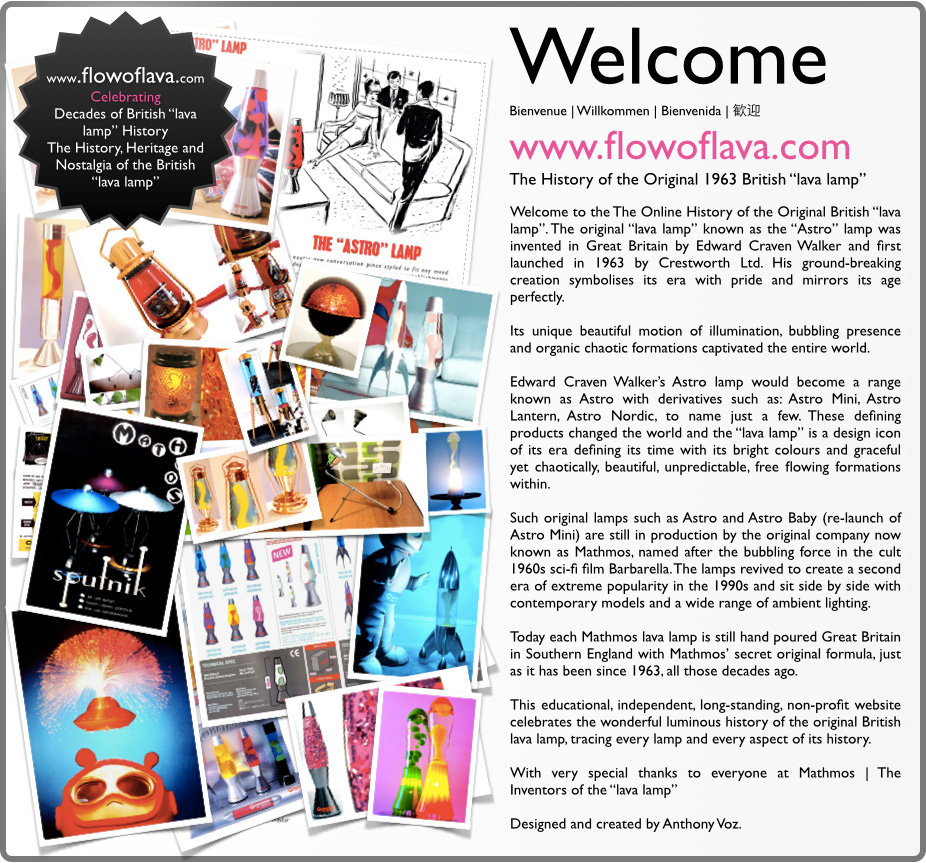
::: Welcome to Flowoflava.com, a site dedicated to the history of the Crestworth & Mathmos Astro Lava Lamp. The world's first and original Lava Lamp. Celebrating the history, heritage and nostalgia of the Lava Lamp. The Historical Archive of the Lava Lamp. ::: |
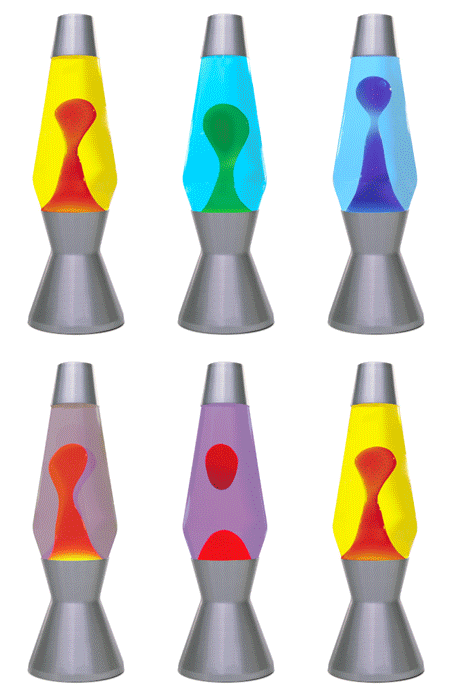 |
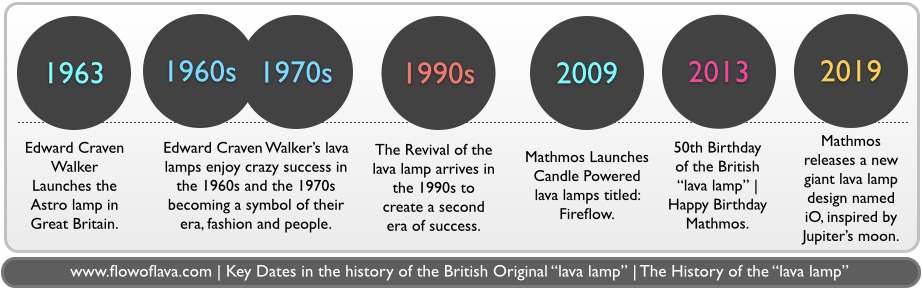
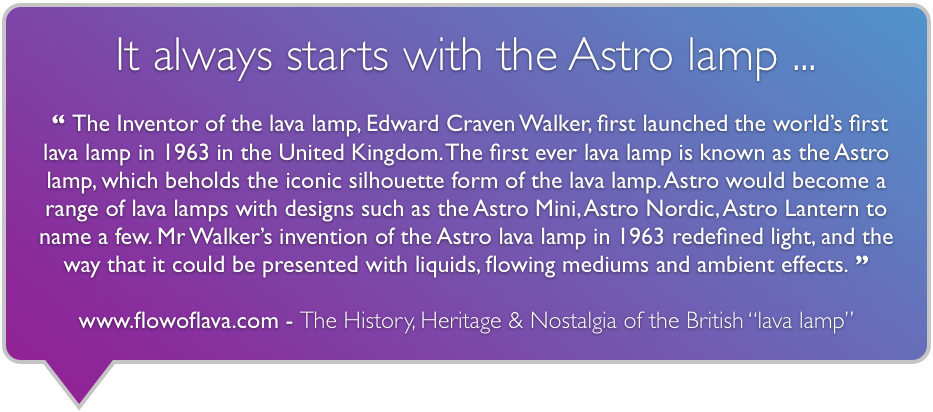
What is the Astro lamp? The Astro lamp is a Pop design classic, a defining and iconic image from the Sixties but one which is still a contemporary piece today. The Astro lamp was the world's first lava lamp born in the 1960s and in production for decades. When and who invented the lava lamp? Invented in 1963, by Edward Craven Walker, the Astro was born out of a fascination with the behaviour of two contrasting liquids within a lamp. Craven Walker had come across a similar contraption in a country pub and then spent years refining its properties until he developed it into a working lamp identical to the one that is still produced today. The Popularity of the lava lamp. The lava lamp was a technological sucess with cultural significance and had begun to be seen in all the most groovy homes. Its cult status was achieved after appearances on TV programmes like The Prisoner, Doctor Who and The Avengers. Please see our TV section for video clips. The lamp has become synonymous with that time. The Icon of the 1960s and the 1970s returns in the 1990s. Although the Astro is known as an icon of the Sixties and Seventies, it is actually more popular today. Recent years have seen a massive resurgence in demand for all things from that era. At the end of the late Eighties two young antique dealers who specialised in post-war artefacts, kept coming across the Astro which were promptly snapped up by keen collectors. Intrigued by the Astro’s obvious appeal, they contacted Crestworth. The factory was still producing but at a rate of 100 per month. Realising the current fascination with the Sixties would endure and spotting the dawn of an era of New Age, Cressida Granger and David Mulley introduced the lamps to a whole new generation. The Mathmos Astro has been exported to nearly every corner of the world and it is a tribute to Edward Craven Walker, that his wonderful invention will always stand the test of time. |

 |
Hello & Welcome to www.flowoflava.com
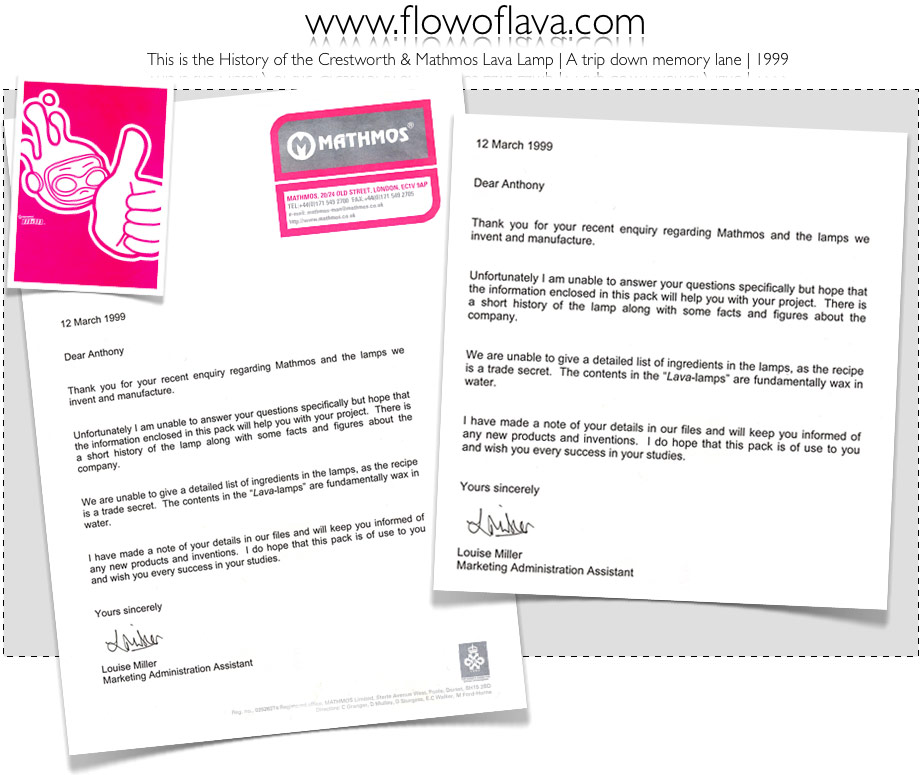
www.flowoflava.com is the World's first site that documents the wonderful and beautiful history of the Crestworth Astro, brought to market in 1963 by Edward Craven Walker. The Astro defined a generation and this site is dedicated to the wonderful products that were produced by Crestworth and the current day company Mathmos. www.flowoflava.com is a non-profit website that documents the history of the Original British lava lamp. All images are sourced from vintage brochures or product models and photography. This site also serves as a timeline documenting the history of the lava lamp. A big thank you goes kindly to Cressida Granger, David Mulley and the Mathmos folks for continuing the flow of the lava lamp ... A great number of early Crestworth lamps survive, however a lot of the history and meaning of these lamps have vanished. Whether you have just bought a lamp documented on the website and wish to learn more, or if you just accidentally found this webpage, welcome to the world of the first lava lamp - The All British Astro Lamp. This site is arranged in chronological order with a menu at the top of the page and also this introduction page features links to all the sections of the site. To browse the site, each page has a navigation menu at the top of the page. Simply click on a section to go the relevant page you wish. This introduction page contains links to all the sections on the website. Please click on the pictures on the left to enter a section. I love hearing your comments and feedback on the website so please email me at: astrohistory@googlemail.com. Thank you for viewing the website. - Anthony Voz |
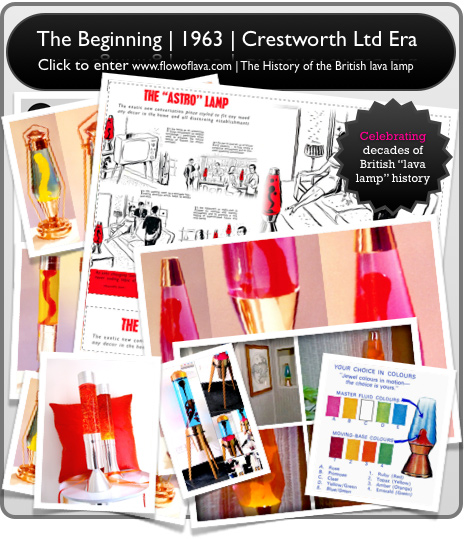 |
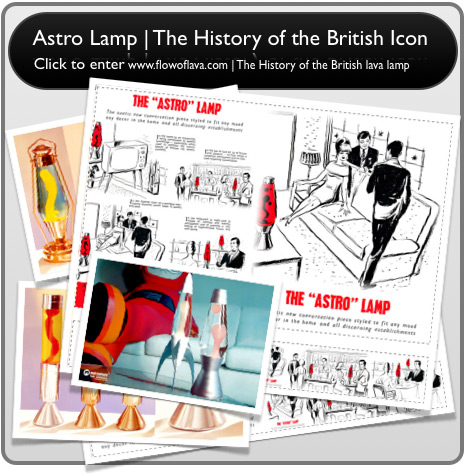
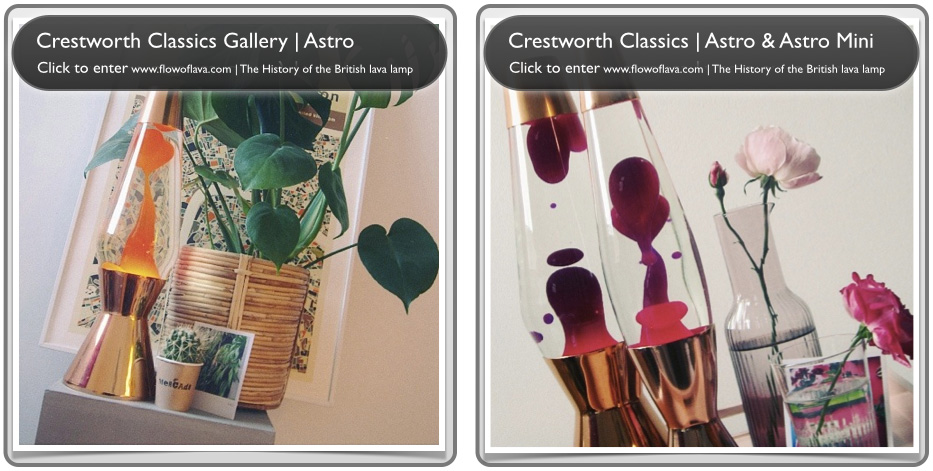
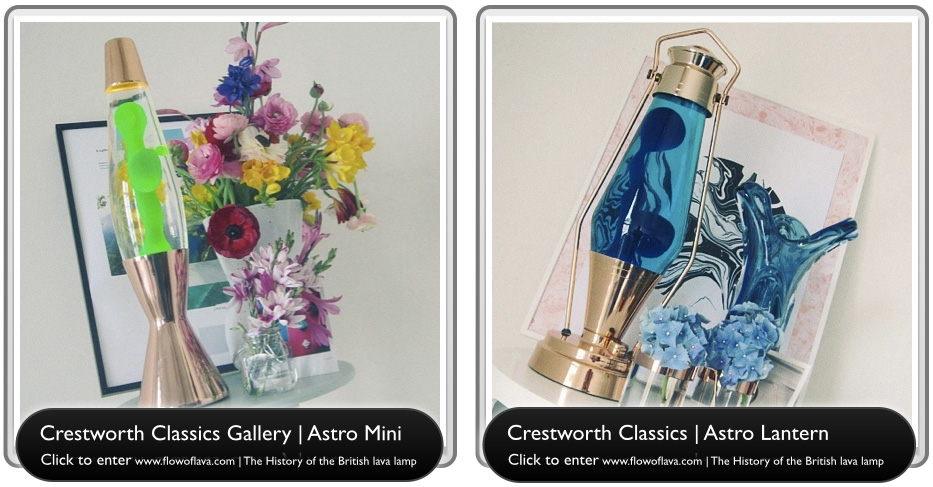
Crestworth Ltd | The Vintage Years 1960s Edward Craven Walker saw the foundation of the idea of the lava lamp from an invention by Donald Dunnet which was on display at a country pub in the New Forest in England. This pub named 'Queen's Head located at The Cross, Burley, Ringwood, Hampshire BH24 4AB. It is amazing that Edward Craven Walker's wonderful vision created multiple generations of stunning lighting products that challenged what one could create with light. After numerous prototypes, the ‘Astro’ was released in 1963. The early Astro had a liquid formulation as opposed to later models which shipped with a solid wax formula. The 1960s Part 1 Page focuses on the very first Astro design MK0. It shows early brochure images showing the Astro Range and vintage colour combination choices. This section also shows the early open base Astro Mini design and the export Crestworth model: Cosmos, which was sold extensively in France by Monsieur Rest's Decoverre. On this page one can also see a complete list of different types of Crestworth copper anodised Astro lamp generations ranging from MK0 to MK5 (5 major designs/ generations of the Crestworth Astro), a simple guide to allow you to identify your copper Crestworth Astro lava lamp, early colour combinations, Crestworth Icons, Astro Lantern, Astro Mini, Early brochures, Crestworth packaging, Princess table top design, Princess Rocket floor standing design, appearances of Crestworth lamps on The Prisoner, Dr Who and the Crestworth Cannon Timer. |
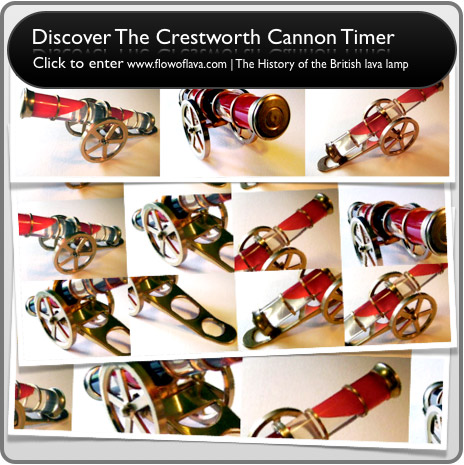 |
Special Gallery |The Crestworth Cannon Timer This page is dedicated to an extremely rare non-electrical item produced by Crestworth named the Cannon Timer. Click on the image on the left to enter this section. Featuring a beautiful design, this Crestworth product was designed as a luxury timer which provided a general reminder. Further to this, this product is so unique as it is completely different to anything else produced by Crestworth. It contains two liquids which do not mix and transfer location slowly as time progresses. When the time has fully passed, the liquids exchange locations completely. The Cannon Timer features movable wheels and the body of the product moves up and down. The bands also move so one can select a time frame to time. This model has only been seen with the clear/red colour combination. It is unknown the various colour combinations that this product featured. With its elegant Gold Plated finish, the Crestworth Cannon Timer is the ideal ornamental telephone timer (or luxury egg timer) with a difference, its fascinating rising coloured oil action is just the thing for those who prefer an intriguing "gentle reminder" to tire-some split-second accuracy. The Cannon Timer is a very elegant yet fragile piece, the model above is original and very elegant. It is a non-electrical item from Crestworth and probably the only non-electrical item in the Crestworth product lineup. It can also be seen in early Crestworth catalogues. |
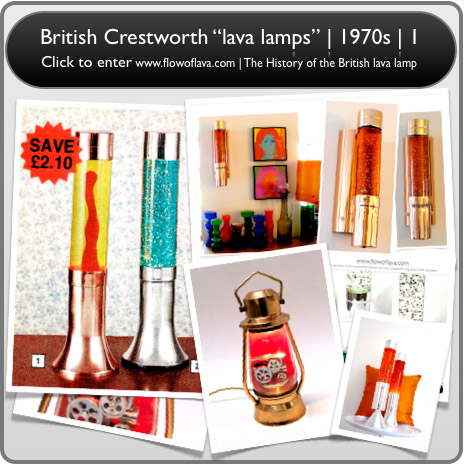 |
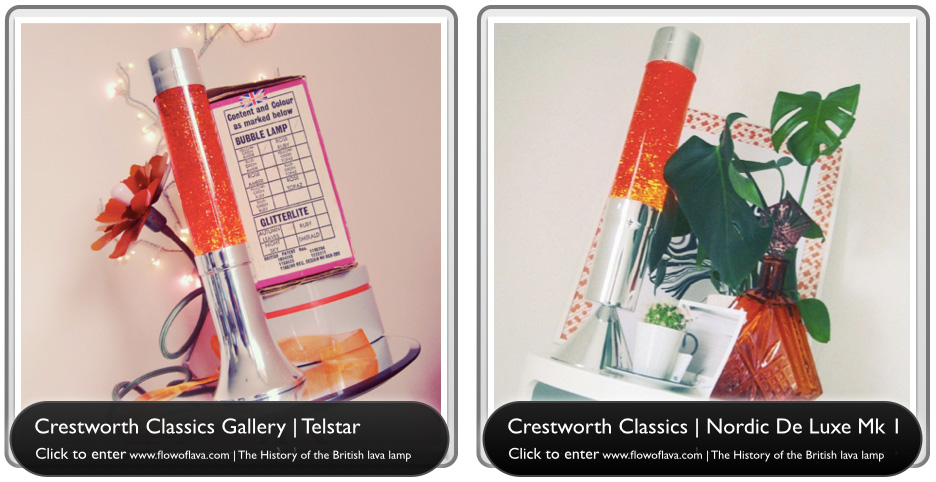
Crestworth Since 1963 |1970s Section: Part 1 Crestworth went from strength to strength in the 1970s. They diversified into fibre optic lighting and continued production of their wildly popular Astro Range and Glitter based products. This page is the first page dedicated to the 1970s. This page features the iconic Crestworth brochure featuring the Astro range and the glitter based products such as Glitterlite and Living Jewel. One can also see the Crestworth entry level Telstar lamp with its flared base design. The Crestworth Glitterlite was in production and was available in four amazing colours: Ruby, Emerald, Sapphire and Amber. This page also displays Crestworth's innovative table lamp designs which featured the option of adding a lampshade to the design. The page also includes images of the Glitterlite wall mounted lamp design that is absolutely stunning. Continuing with all things Glitterlite, we can also see a rare European Crestworth Glitterlite featuring a beautiful brushed brass finish. This page also looks at the Crestworth Living Jewel, the popular fast moving solvent based glitter lamp. The Living Jewel: The brochure reads: The sparkling interchange of colours create a "Jewel to Delite". Design and workmanship of this lamp is of high quality, meeting all new electrical requirements and conforms with the safety recommendations of the Department of Trade. Height 16" Base Width 4 1/4" This page also looks at Crestworth's other kinetic lighting ideas such as the Crestworth Traction lamp, Crestworth Mistrolite and the ultra-rare Giant Mistrolite. Click on the image on the left to enter this section. |
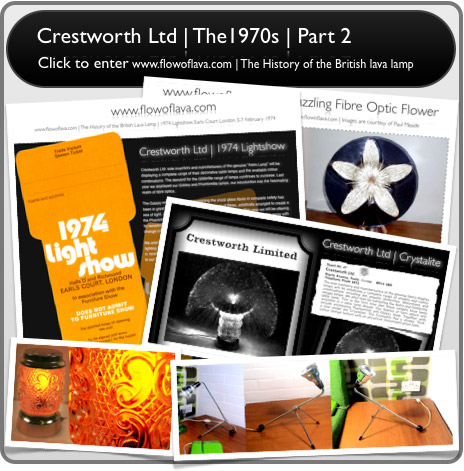 |
Crestworth Since 1963 | 1970s Section: Part 2 This section continues the 1970s with more information and images on the Phantom Lite. The Phantom Lite is a small fibre optic lamp that was sold by Crestworth and is one of the most popular fibre optic lamps that were produced by Crestworth. It is very commonly seen, but these little lamps are very beautiful and display an amazing light show then plugged in. Crestworth's 1970s Fibre Optic Range Included: Phantom Lite, Super Phantom via Supplementary Base, Snowflake, Crystalite (Marked Discontinued on the Brochure), Flowerlite & Galaxy. This page takes an extensive look at Crestworth' fibre optic lamps. It also features a small introduction to the Crestworth Twiggy and a look at Crestworth's Aromalite. Click on the image on the left to enter this section.
|
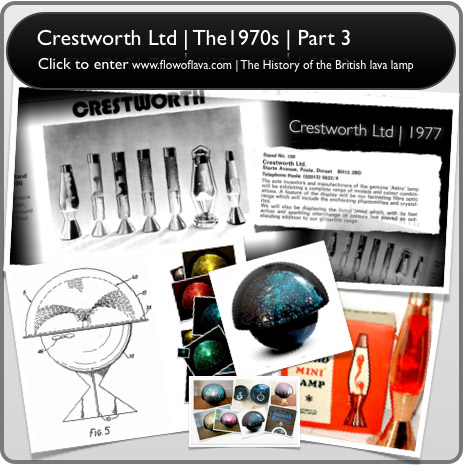 |
Crestworth Since 1963 | 1970s Section: Part 3 More eye-candy from the 1970s. This page focuses on the 1970s product lineup, pictures of the Astro Mini packaging and a wealth of info regarding the Crestworth Galaxy. The Astro Mini with its sleek and wonderful design is a timeless classic. Currently still in production today in a silver finish and called Astro Baby, the Astro Mini is a very beautiful and elegant design. The Crestworth Galaxy was a stunning piece and featured glass fibre optics placed under a patented enclosure that protected them from dust and hands. Sadly after the 1970s, styles changed and the 1980s brought bad news for Crestworth. The company found the demand for their products had vanished and the company started to decrease in production. It was only in 1989 and the early 1990s, did the revival of the Astro begin on a path to restore its place in the public eye. Click on the image on the left to enter this section.
|
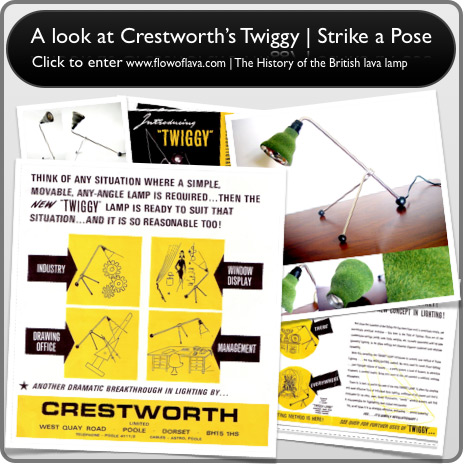 |
A look at the Crestworth Twiggy | Special Feature. Whilst Crestworth Ltd was a powerhouse of kinetic lighting, it produced a rather unsual product called Twiggy. Remaining unseen for so long, this clever little lamp is Crestworth's answer to functional lighting with a very special design. Along with the Canon Timer, Mistrolite and other Crestworth rarities this lamp is one of the more rarer Crestworth lamps. Twiggy is described as "THE SENSATIONAL ALL-PURPOSE LAMP" in a 1970s Crestworth Brochure. Think of any situation where a flexible all purpose lamp could be used, then think of Twiggy. A copper version and a silver coloured version have been seen. Featuring a very clever yet simplistic design, Twiggy can be moved around in so many different ways to shine where ever you want it to. So get ready to strike a pose. A big thank you goes to the kind people at Flying Duck for their images and kindness. I was able to document this product so well thanks to their beautiful images. Click on the image on the left to enter this section.
|
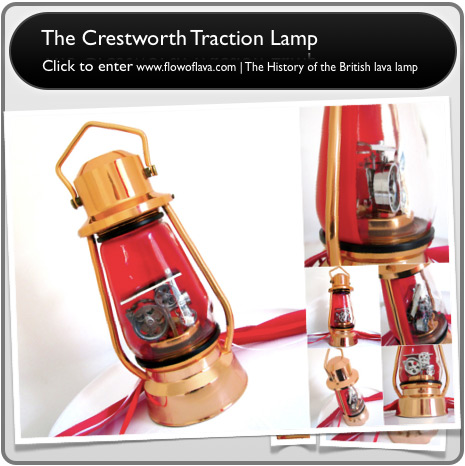 |
A look at Crestworth's Traction Lamp Whilst Crestworth Ltd was a powerhouse of kinetic lighting, and whilst it is most famous for its amazing liquid creations such as the iconic Astro range of lava lamps, glitter lamps and other creations, it also produced some interesting non-liquid designs. One lamp which is an interesting part of Crestworth's history is the Traction lamp. The Traction lamp by Crestworth, features a model steam engine working inside an illuminated enclosure of a lantern or a ship's storm lantern and provides the romance of the steam age mixed with the power of the past. Click on the image on the left to enter this section.
|
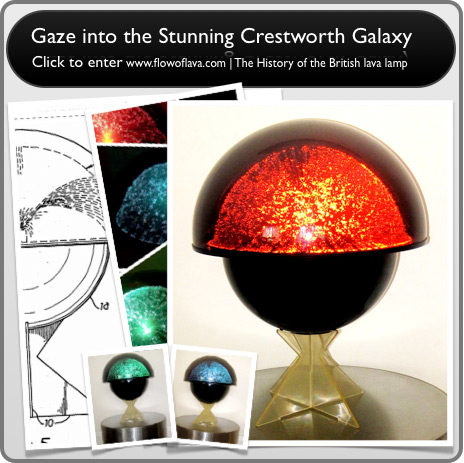 |
1970s Crestworth Galaxy Fibre Optic Light | Approx 40,000 Shining Lights This page focuses on the Crestworth Galaxy. There are photos, a patent diagram and even the original instructions typed out of this wonderful beautiful Crestworth fibre optic lamp. The Galaxy and the Phantom Lite are the two most commonly found Crestworth fibre optic lamps, therefore this means they were extremely popular in their original time. The Crestworth Galaxy was the only Crestworth fibre optic piece to feature a patented sealed unit that keeps the glass fibres completely safe and clean. This page also shows the Crestworth Galaxy with the original perspex stand, which elevates the product. The Crestworth Galaxy goes through beautiful colours and is a stunning piece. Tens of thousands of minutely fine glass fibre optics artistically arranged to create an ever-moving, swaying sea of light, gently changing from one vivid colour to another. Special Sealed Unit - There is a special patent "sealed unit" to contain the sharp, penetrating glass fibres in complete safety - away from inquisitive hands. Lamp-Housing. - This "sealed unit" Fibre-Housing stands on a Lamp-Housing which is fitted with a Tungsten-Halogen bulb (6 volt-20 watts), a transformer and two electric motors, one of which drives a rotating coloured disc and the other a fan which gently fans the fibres to and fro. Please Note: There were will be a variety of coloured discs available, so, these are easily inter-changeable should you keep in touch with your retailer if you are interested. HOW TO CHANGE THE COLOUR DISC OF A "GALAXY". 1. Remove the "sealed unit" Fibre-Housing and stand this on some soft surface. 2. Carefully remove the main part of the Lamp-Housing from its black supporting dome (which may be a tight fit) and ... Instructions are continued on the page. Click on the image on the left to enter this section. |
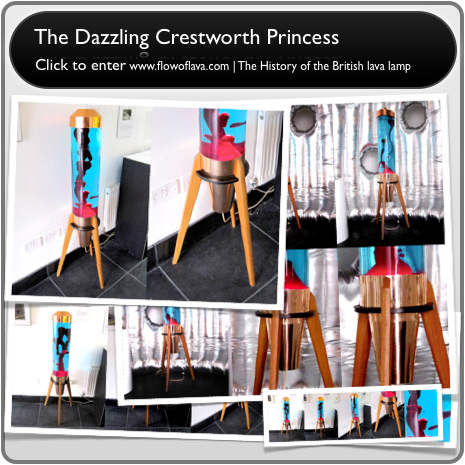 |
A look at the Crestworth's Dazzling Princess Floor Standing Lava Lamp Design Perhaps the most ultimate vintage lava lamp is the Crestworth Princess. Floor-standing by design, this lamp features a gigantic tubular glass container filled with specialist lava liquids and is held on a tripod base design to create a stunning effect. This lamp is seen in vintage tradeshow images regarding Crestworth and is a stunning example of Crestworth's lighting. Princess from Crestworth was seen and loved at Mathmos' vintage lava lamp exhibition held in 2009. Click the image on the left to see more ...
|
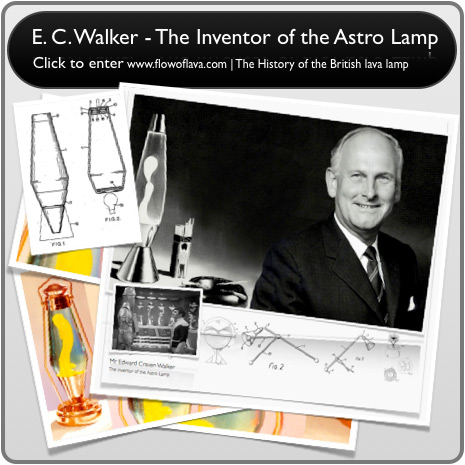 |
Mr Edward Craven Walker | The Inventor of the Lava Lamp This page is dedicated to Edward Craven Walker (1918 –- August 15, 2000), born in Singapore, is mainly remembered as being the inventor of the psychedelic ‘Astro’ Lamp, or ‘Lava Lamp’ as it is known in America. Click on the images on the left to enter this page. The lamps were a massive success through the 60's, becoming symbolic of psychedelia, and virtually every household had one. Craven Walker said of its mesmerizing motions, "If you buy my lamp, you won't need drugs... I think it will always be popular. It's like the cycle of life. It grows, breaks up, falls down and then starts all over again". Through the high-flying 80's the ‘Astro’ lamp was considered extremely unfashionable and Crestworth pretty much closed down. However, in the early 90's, a young couple once again saw the potential of the lamps and began manufacturing and selling them successfully. Cressida Granger and David Mulley approached Craven Walker after becoming interested in the Astro’s popularity at Camden Market. Mr. Walker remained a minority shareholder in the company for five years and then remained a consultant at Mathmos until he passed away. |
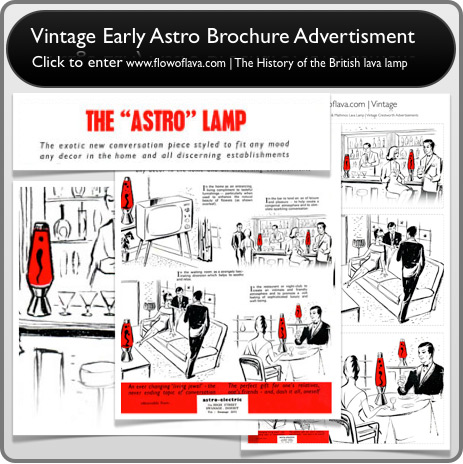 |
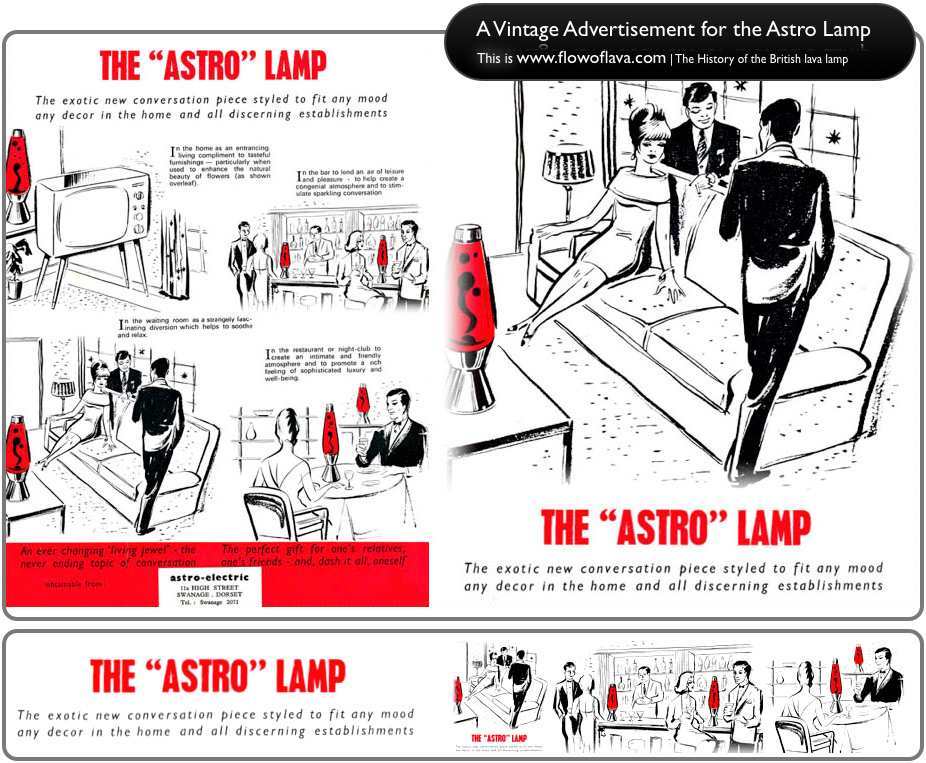
Crestworth | Vintage Early Astro Brochure Advertisement This mini section of www.flowoflava.com is dedicated to a vintage Crestworth brochure showing the Astro and Astro Mini designs. This vintage brochure also displays the different colours used by Crestworth at that time, shedding light onto the colour combinations of the era. This wonderful and beautifully hand drawn brochure shows Crestworth lava lamps at the home next to a television, at a bar, dinner table and even a lounge. Enjoy. Click the image on the left to see more ...
|
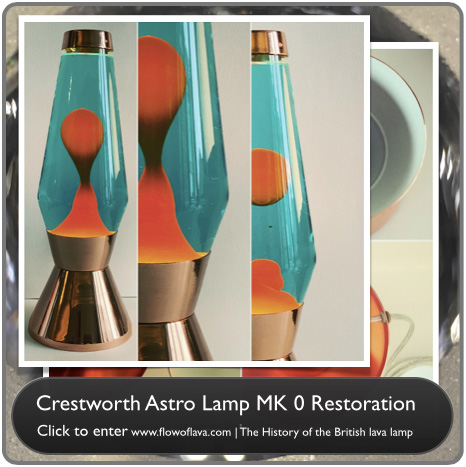 |
Crestworth | A Look at the Earlier Versions of the Astro Lamp | Restorations | MK 0 Astro Lamps ... Whilst the lava lamp has come a great way since its introduction in September 1963, the first Astro lamps which were manufactured on West Quay Road have started to surface. These lamps echo a time when the lava lamp was unheard of, before its explosion in popularity in the subsequent 1960s and the 1970s. These lamps which we refer as MK0 Origin Designs have hand blown crystal glass vessels to contain the formulation, a two part interlocking base, and extremely shallow top. These page features restorations and examples of such early Astro lava lamps. These Astros predate the solid later Crestworth formulation and were most likely only sold by Crestworth who knew how to transport them or Colin and Jean 'Smokey' van. At the launch of the Mathmos Flocked limited edition lava lamps in Mathmos' office/ shop space in the 1990s, Edward Craven Walker referenced these lamps by saying ... "Well, when we first started it, the Astro lamp, as we called it then, we manufactured the glassware by hand blown crystal glass, and in that stateit was in very small quantities, as it was extremely expensive ..." - Edward Craven Walker Click the image on the left to see more ... |
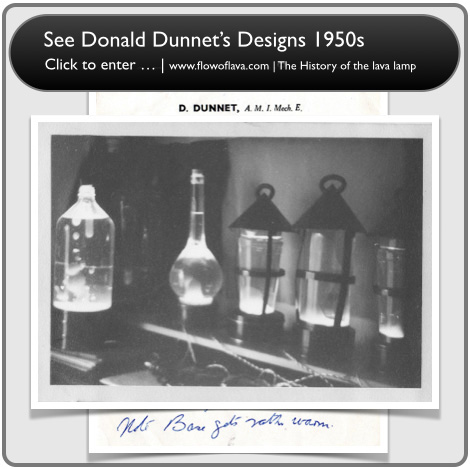 |
Origins of the lava lamp | Designs from the 1950s by Donald Dunnet The fudamental basis of the lava lamp is two liquids moving within themselves and this in itself was a totally new concept in lighting that formed the basis of the invention of the lava lamp. Never before had anyone thought that illuminated liquids, that were powered by heat could be mixed to form a lamp. A name which is often credited as being the inspiration behind Edward Craven Walker's introduction of the Astro lamp is Donald Dunnet, but very little is actually known about him as he sadly passed away. In fact in early Astro lava lamps, an instruction sheet and paperwork were included inside every box which details his invention and the inspiration behind the Astro lamp. Donald Dunnet was an engineer based in Goring-by-Sea, Sussex and his patented inventions were diverse. His registered address as seen on patent information is 10, Ballards Green, Burgh Heath, Surrey. Amongst his many inventions was a unique invention for a "A display device using liquid bubbles in another liquid ", dating to 1954. This interesting patent which features a bottle with a light bulb concealed behind the bottle. Click the image on the left to see more ... |
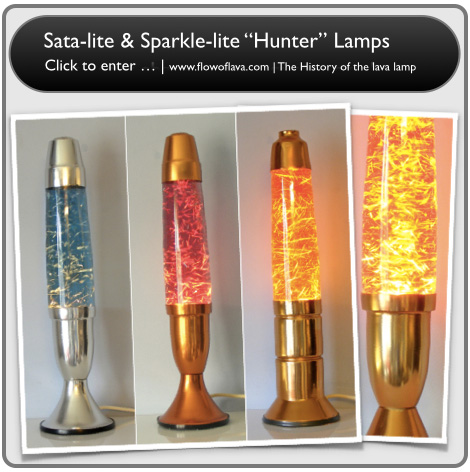 |
Sata-lite & Sparkle-lite Lamps aka "Hunter" Lamps This section is dedicated to Sata-lite & Sparkle-lite lamps also known as Hunter Lamps. Sata-lite and Sparkle-lite lamps were competitor lava and glitter lamps that were produced in the 1970s in the UK. The company was run by John Edward Hunter in the United Kingdom and was in direct competition with Edward Craven Walker's Crestworth company of Poole. These lamps are also known as Hunter lamps. Normally, found open at the base like earlier Crestworth lamps, these lamps were very simply made. The lamps were awarded a patent after numerous Crestworth patents, however they never returned to mass manufacture the lamps and vanished after the 1970s. They were extensively seen on TV and in particular, the George and Mildred TV Series. Mildred explains to George how the lamp works and there is a great scene where George has stolen power from the neighbour next door via an extension cable. When the neighbour starts pulling the cable, the lamp keeps moving mysteriously. Remarkably, there is a surprising amount of interest in these models within the collecting community, they are often confused as Crestworth items, thus they have been indexed and documented. Click on the image on the left to enter this section. |
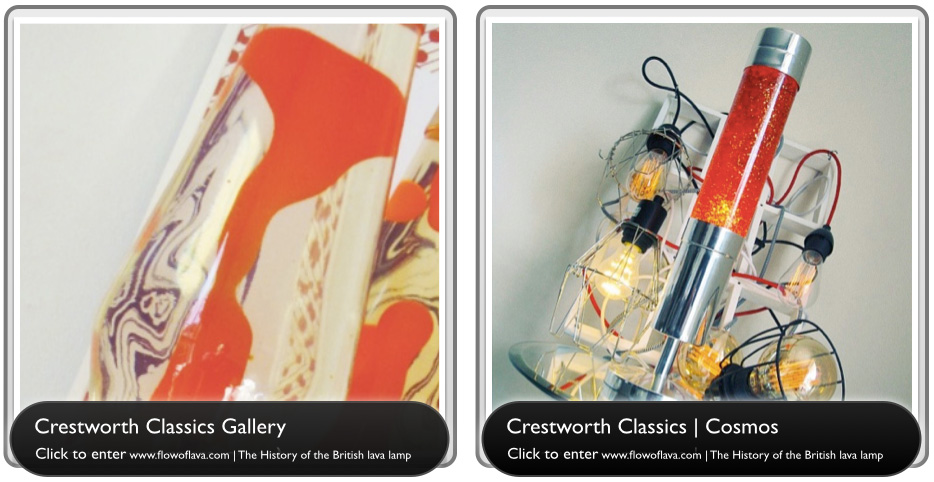
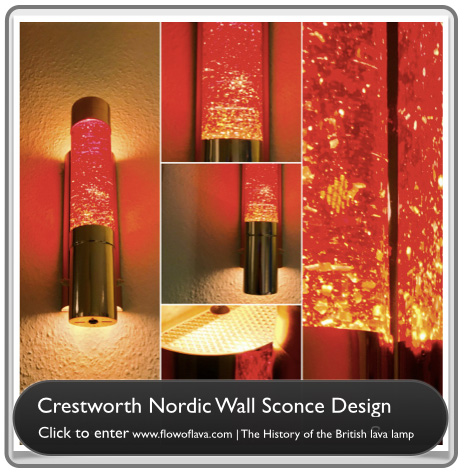 |
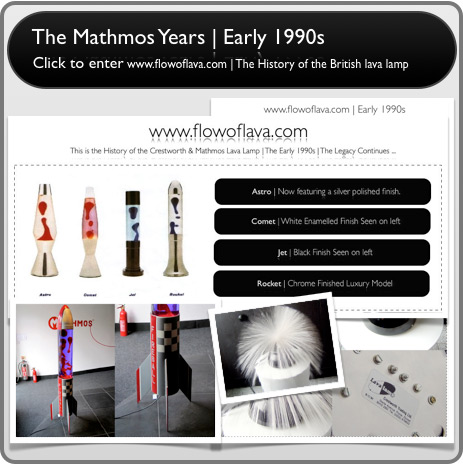
Crestworth Nordic Wall Sconce Design Crestworth created a beautiful and diverse range of Glitterlite lamp designs, from table lamps which featured the option to accommodate lampshades, a stunning wall-mounted model, to their entry-level Telstar design, to the elegant export Cosmos design, to even a beautiful brass finished model. We particularly love the wall-mounted Crestworth Nordic sconce design which features a backlight option. This design features two switches, each placed on either side of the lamp's design. One switch would switch on the backlight on the top and bottom of the piece. The other switch activates the lamp's main feature, to illuminate the contents of the bottle. The models most often seen, feature the Glitterlite formulation but Crestworth's wall-mounted lamps also featured the Astro lava lamp liquids and if the customer wished, The Living Jewel. Manufactured by Crestworth in both copper and silver anodic finishes. Glitterlite: Known Colours: Ruby, Emerald, Sapphire (Night Sky), Amber (Autumn Leaves).
|
 |
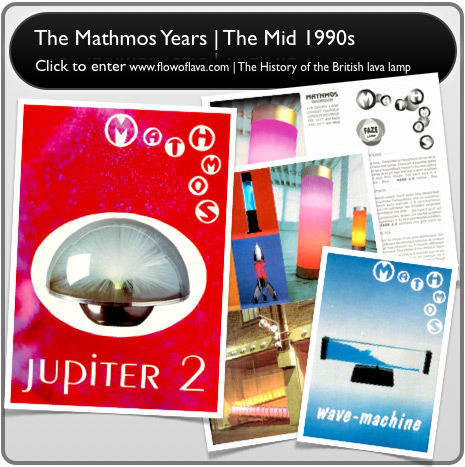
Early 1990s | The Revival of the Lava Lamp Find out more about the early 1990s by clicking on the image on the left. Some of the known Products in Production: Astro, Comet, Jet, Rocket (Clear/Blue), (Clear/Red). Astro - Height 17" Silver Anodised Finish. Comet - Gloss White Enamel Finish. Jet - Height 16" Gloss Black Enamel. Rocket - Height: 18.5 " Chrome Base and Cap. Most expensive product of the lineup. Colour Combinations that were in production: Violet/Red, Violet/Orange, Blue/Red, Blue/Blue, Green/Red, Green/Yellow, Yellow/Red. This page documents the start of the revival of the Lava Lamp. In 1989, Cressida Granger and David Mulley started the path of restoring the Astro back to its former glory. They predicted a revival in the Astro lamp and created some of the most dazzling and beautiful kinetic products. This page displays the products placed in production during the early 1990s, including the Crestworth Comet and the stunning Crestworth Giant lamp, which can be seen in the image on the left. |
 |
Mid 1990s | The Mathmos Years | The Revival This page is dedicated to the range in production during the Mid 1990s. Here are some of the products that are featured on this page. Lunar: Polished Aluminium base and cap. Two Models: Violet Liquid and Red Lava. Yellow Liquid and red lava. 80cm tall. Find more about the Mid 1990s by clicking on the image on the left. Jupiter 2: £195 Polished aluminium, glass fibres, perspex dome. h:32cm w: 47cm One model: light colours: blue,red,yellow and green. Launched by Mathmos 1992 discontinued 1996. Sputnik: The Mathmos Sputnik is an aromatherapy lamp that was shipped in three colours. £39.95 Anodised and polished aluminium. H: 20cm W:30cm 3 Models: silver/blue, silver/purple & silver. 3 aromas are included: sandalwood, lemon and patchouli. Astro: £49.95 - Silver Anodised Aluminium. 5 Colour Combinations. Violet/Red, Violet/Orange, Clear/Grey, Blue/White and Pink/Orange. Jet: £39.95. Black anodised aluminium. 5 Colour Combinations. Faze 2: The dazzling Mathmos Jupiter 2, an amazing fibre optic lamp which features a plastic cover to protect the beautiful yet fragile fibre optics inside the product. Launched by mathmos 1995 discontinued 1997 approx. 2 Versions. This page features detailed information on the Faze 2 lamp. Telstar: £59.95. Polished silver legs, various coloured anodised aluminium bodies. Continued... |
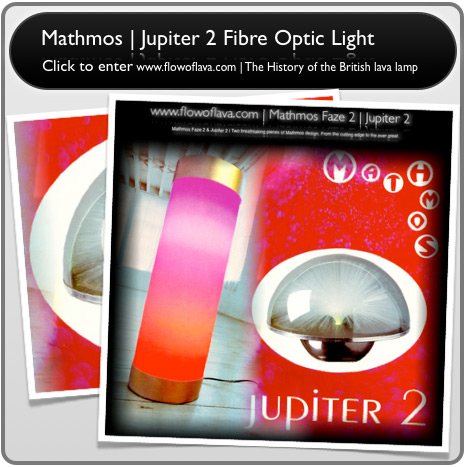 |
Special Feature | Mathmos Jupiter 2 Fibre Optic Light Jupiter 2 is one of the most beautiful fibre optic lamps of the 1990s, manufactured from polished aluminium, glass fibres and a perspex dome. Jupiter 2 drew inspiration from the Crestworth Galaxy with a space-age spherical design and the optics protected under a dome. H:32cm w: 47cm One model: light colours: blue,red,yellow and green. Launched by Mathmos 1992 discontinued 1996. (Please see images below). The following details are found under a Jupiter 2: 12V 20W | Supply: 220/250v 50Hz Transformer rating 20VA. The correct bulb for Jupiter 2 is a halogen G4 12V 20W bulb. Find out more about Jupiter 2, by clicking on the image on the left.
|
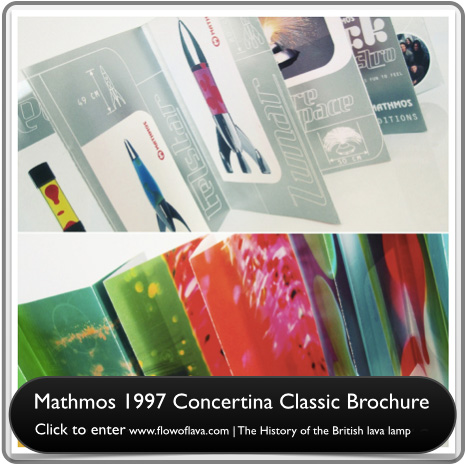 |
Mathmos 1997 Concertina Brochure Catalogue Mathmos 1990s Classics | 1997 Mathmos Brochure Featuring The Iconic Products from the 1990s ... One of the best pieces of printed material showcasing the vibrant Mathmos products from the 1990s, this concertina 1997 Mathmos catalogue, is all fun. From Jet to Astro to Telstar to Lunar to Jet Glitter to Fibre Space to Faze 2 to Flock Limited Edition Astro, this brochure echos the second era of popularity of the lava lamp and the vibrance of the 1990s. We love this catalogue, the products it showcases and the people such as Ron Evans behind them. Click on the image on the left to enter this section.
|
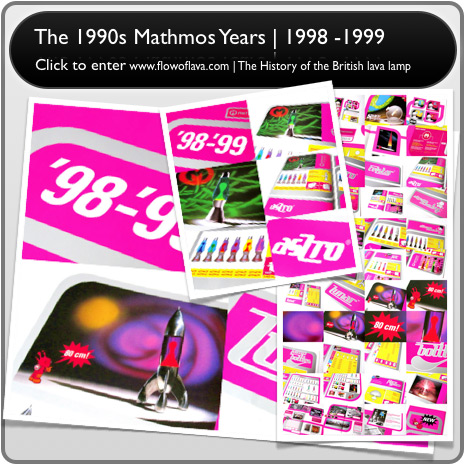 |
Mathmos 1998 - 1999 | Astro, Astro Baby, Jet, Telstar, Lunar and so much more ... This section is dedicated to Mathmos in 1998 - 1999. See all the lamps that were in production such as Astro, Astro Baby, Jet, Lunar, Telstar and so much more … This Mathmos 1998 - 1999 brochure perfectly describes the Mathmos brand with bright colourful graphics, beautiful products and fun fictional characters. Click on the image on the left to enter this section.
|
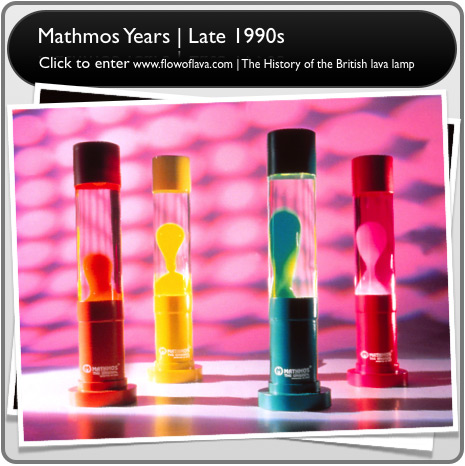 |
This section is dedicated to the later 1990s products produced by Mathmos. You can see a selection of brochure scans and product models and press cuttings. Find out more regarding the Late 1990s by clicking on the image on the left. Queen's Awards: Where Kitch Means Cash. 21st April 1997 Press Cutting: Independant. The lava lamp and the adjective "naff" have been in circulation for roughly the same time. Rarely have the two been separated. The lava lamp was naff when kitsch was a word barely pronounced outside Germany, and irony unknown in home furnishing. But a happy collision of naffness, kitsch, fashion and irony has kept the lava lamp in production for over 30 years, outlasting many of the seaside tat specialists which were its first stockists. Its unsophisticated appeal is apparently universal and - with some irony - particularly marked in Germany, a country whose fondness for pointless frippery has remained one of its less visible features. More than 500,000 lamps are now made every year at a totally non-ironic brick building on an industrial estate in Poole, Dorset, and 65 per cent of them go abroad, mostly to Europe. More inside the page ... Featuring images of the Astro Range (Astro, Astrobaby, Telstar, Glitterbaby, Jet, Fibre Space, Faze 3, Lunar), Space Projector. This also shows the Dayglow jets, the brochure states they are released in early 1999. |
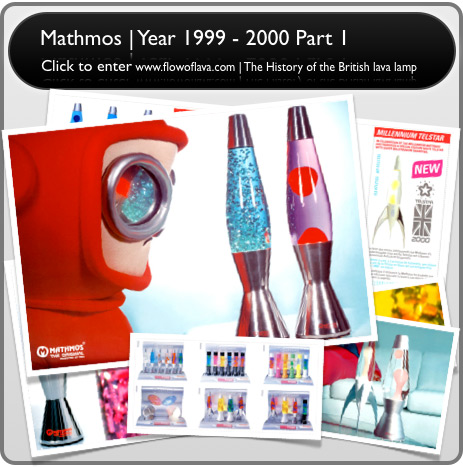 |
1999 - 2000 Mathmos Product Range Part: 1 This section is devoted to the the Year 2000 at Mathmos, this section is divided into three pages. Click on the image on the left to enter this section. This page specifically focuses on: The overall product range at the time, Glitterbaby, Astrobaby, Jet, Millenium Telstar, 3-In-1 Astro & Misc Brochure Scans. One can see a wide selection of images including the promotional shots featuring the Mathmos Man photographed with a wide selection of products. There is also a chart that features the product range and the colour combinations during this time. Click on the image on the left to enter this section. |
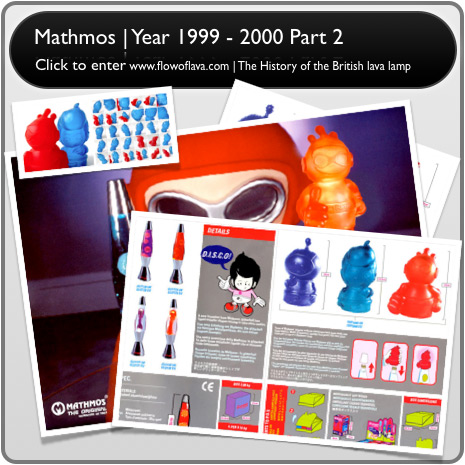 |
1999 - 2000 Mathmos Product Range Part: 2 This section continues documentation of the products of the Year 1999-2000. Featuring information regarding the Glitterball Range. One can see both brochure images and real world images of the Glitterball lamps. The coloured Glitterballs are most commonly seen as Clear/Green and Clear/Blue. You can also see the wide range of Jet colours that were in production at this time, with white, black and coloured enclosures. This page also features information regarding the white based Mathmos Fibre Space lamp. It also features images which relate to the Mathmos Display Guidelines and show Mathmos displays that were used in shops. Click on the image on the left to enter this section.
|
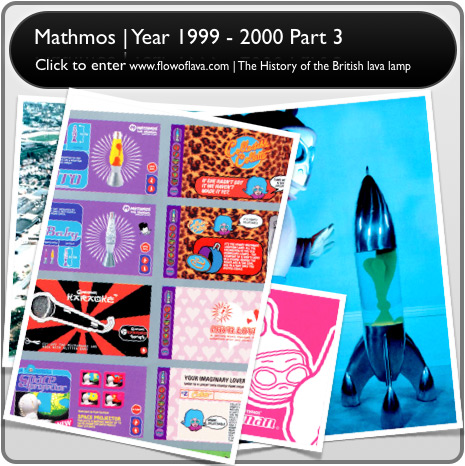 |
1999 - 2000 Mathmos Product Range Part: 3 This final page regarding the Year 2000 - shows the Mathmos Lunar. A stunning 80cm tall beautiful lava lamp shaped like a rocket. The Lunar remains one of those most beautiful Mathmos lamps produced, it was essentially the flagship and high-end model of the Lava range at this period of time. Also featured are information and pictures regarding the Mathmos lamp toppers which were fun characters that are placed on selected compatible lamps and glow. There were three different fun characters: Mathmos Man, Glitterbaby and Astrobaby. One can also see images regarding the Mathmos brand and club. The club was a really cool way to build a relationship with Mathmos' loyal customer base and get money off lamps with points. Further to this there are images of Mathmos at Old Street and Drury Lane. Also included are scanned beautiful images of the Mathmos factory from the air. Click on the image on the left to enter this section. |
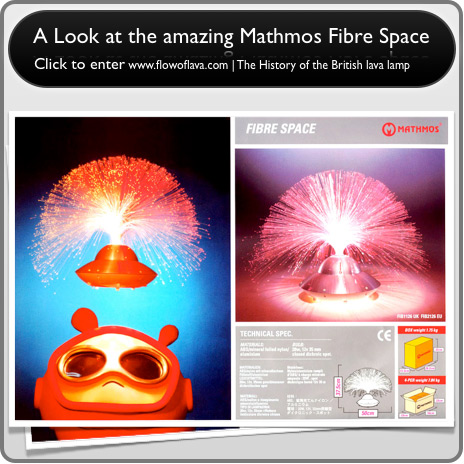 |
Special Feature | Mathmos Fibre Space Mathmos is well known for a range of Astro Lava Lamps and Glitter lamps. However, just like Crestworth in 1970s, Mathmos even in the early 1990s, designed and produced their own range of lively fibre optic lamps.
The real fun is when a colour wheel is added to the design. A rotating coloured wheel driven by a motor will create an array of colours projected through the fibers. Mathmos produced a selection of these lamps including the stunning Jupiter 2 & Starburst models. This page focuses on the last fibre optic lamp introduced by Mathmos in the 1990s. It was discontinued due to the sheer amount of copies that flooded the market. Nevertheless no copy, can beat the beautiful design of the Fibre Space. This page also features inside views to the components of the Fibre Space and shows the location of the bulb, handy if you need to repair one of this beautiful pieces. This page is dedicated to the Mathmos Fibre Space. Click on the image on the left to enter this page. |
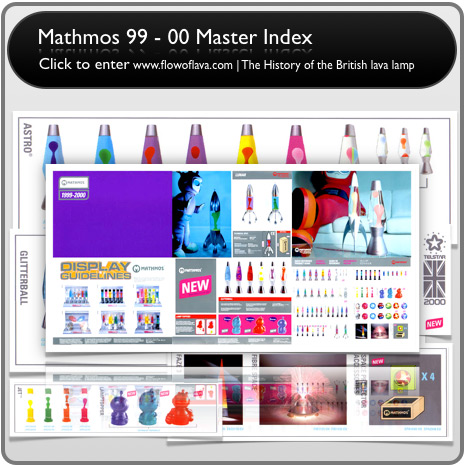 |
Mathmos Year 1999-2000 Model & Colour Index Chart A complete index of the Year 1999-2000 Product Range & Colour Combination Chart. This page features a high resolution scan of the Mathmos Quick Reference chart. It features a detailed chart of all the colour combinations in production. Other custom colours have surfaced but these colours were the mainstream default colours that shipped to most of the public. See models such as: Astro, Astro Baby, Glitter Baby, Jet, Telstar, Lunar, Colourful Jet Series, Mathmos Lava Lamp Toppers, Fibre Space, Space Projector ... Click on the image on the left to enter this section. |
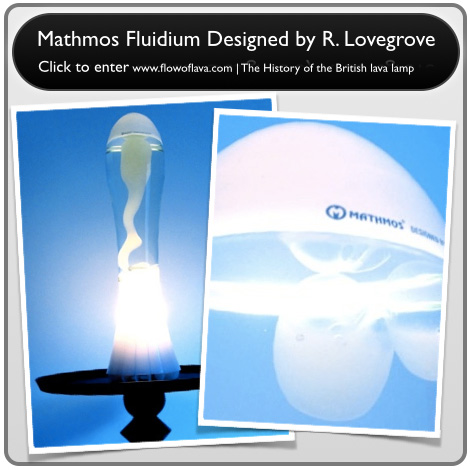 |
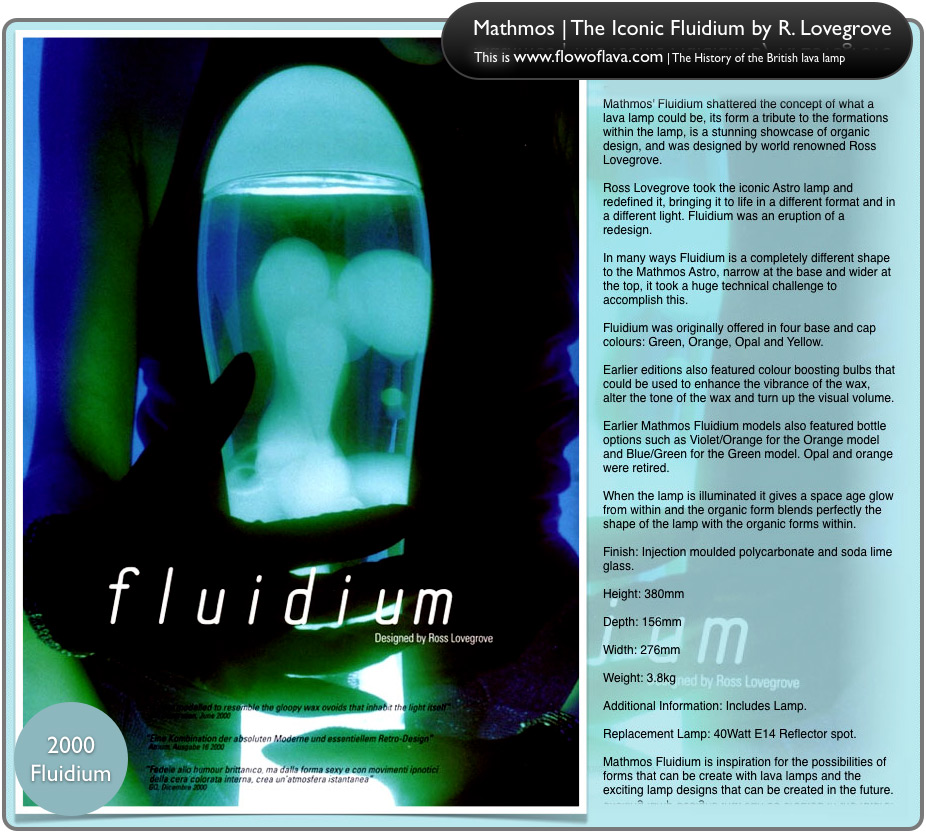
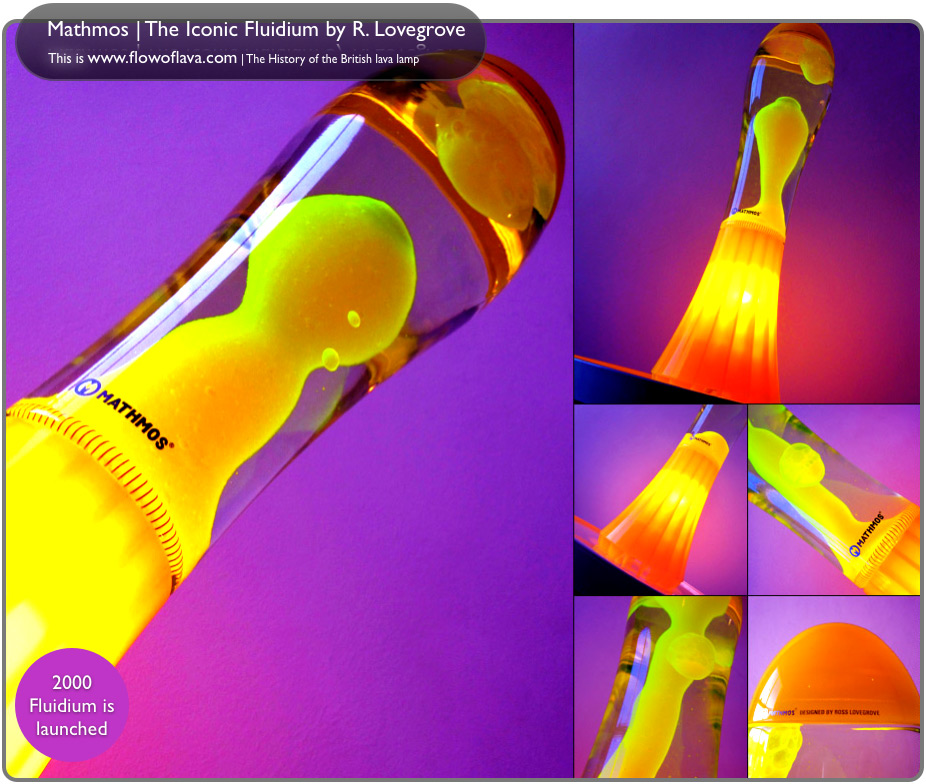
Mathmos Fluidium by Ross Lovegrove A lamp that needs no introduction due to its iconic shape. This is Ross Lovegrove's vision of the new Lava Lamp, some call it kinetic art, some call it stunning, I call it genius. Originally shipped in four colours, Opal, Orange, Yellow and Green. The official and original colours of the Fluidium were: Opal Body: Clear/ White. Yellow Body: Clear/Yellow. Green Body: Clear/Green, Blue/Green. Orange Body: Clear/Orange, Purple/Orange. With the two first colours being withdrawn from production. This lamp is still a triumph of design and proves that with creativity and design the Mathmos original Lava Lamp is the eternal design icon of our time. Click on the image on the left to enter the Fluidium Section. The Opal Fluidium was one of my first lamps as I sit here typing this, this is flowing in front of me. |
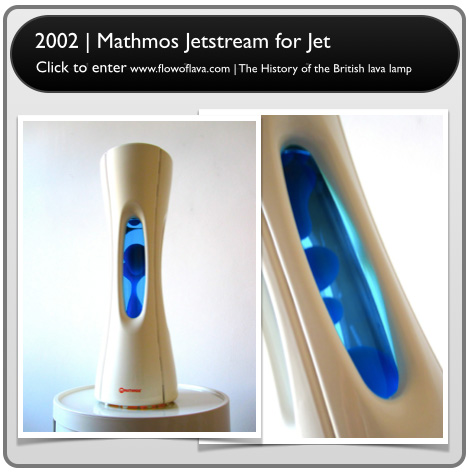 |
Mathmos Jetstream | Slide on cover for Mathmos Jet
In 2002, Mathmos launched Jetstream, a slide on cover that could instantly transform the Mathmos Jet into a completely new lamp and offered Jetstream in white and silver colours. Jetstream has an organic appearance to it and is constructed from four side parts, a top and base part. Jetstream is a slide over that can be applied to the Mathmos Jet by simply removing the cap and placing the Jetstream over the existing Jet bottle and base to create a stunning new look. For more information on the Mathmos Jetstream why not visit our Jetstream section by clicking the image on the left.
|
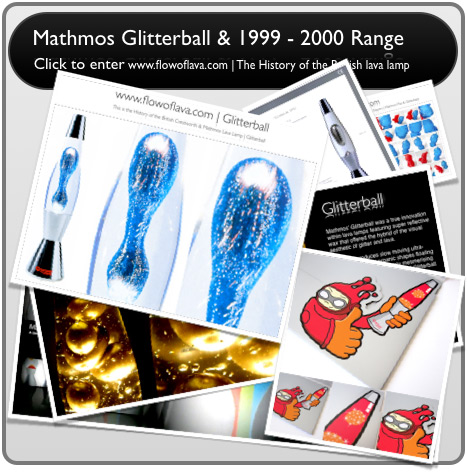 |
Mathmos Glitterball & Year 2000 Product Range This page is dedicated to more of the Year 2000 product range but also features images of the Glitterball lineup produced by Mathmos. Some of the colours have never been seen in person and only in the brochure. Glitterball is essentially metallic lava and combines the best of a glitter lamp with a lava lamp. The desired effect of the Glitterball is to produce slow moving shapes that flow in a bottle. These lamps are mesmerising but don't flow as fast as a traditional Astro Lamp. The Glitterball was produced in various colours and in silver. The Silver model was also sold with the Telstar rocket base and cap as well as the Astrobaby Base and Cap. I remember seeing a silver Telstar Glitterball in a London department store called Peter Jones when I was a kid. Click on the image on the left to enter this section. |
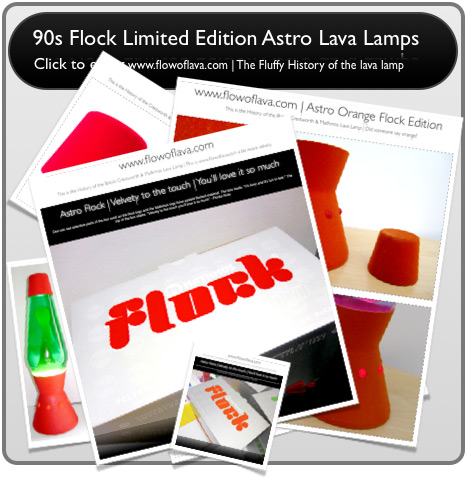 |
Special Feature | Mathmos Astro Flock Astro Flock was something for the fans and collectors of the Astro. In the 1990s Mathmos introduced the Flock Range. Flock is essentially an Astro covered in flocked fluffy material, that is fun to touch and feel. There were 3 colours that were produced: Orange, Red & Green. The coloured contents of the bottle were usually the opposite colour to the base and cap. Also the flocked bottles used the same colours for the fluid and the wax. The Orange featured a Violet/Violet bottle. The Red featured a Green/Green bottle. The boxes shipped with the flock logo cut from flocked fluffy material and pasted on the front and top of the product's box. The Astro Flock had a sticker stating the number of the Flock on the underside of the base. The base features cutouts which have translucent widgets placed into the holes that glow when the lamp is switched on. These widgets feature the Mathmos logo. The cap is also flocked. Each lamp had a dimmer on the cable and featured a certificate signed by Edward Craven Walker. Further to this only 1000 of each colour were produced. These lamps do have a huge following. Flocks are fluffy but they do rule. Click on the image on the left to enter this section. |
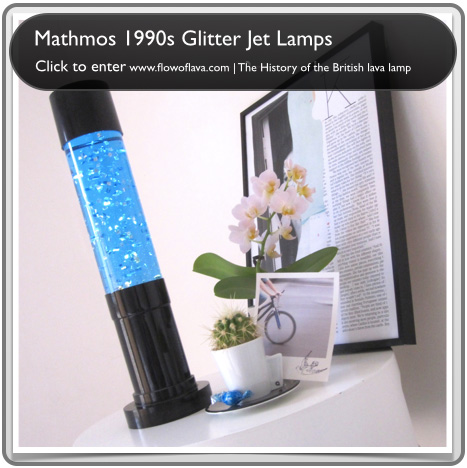 |
Special Feature | Mathmos 1990s Glitter Jet Lamps Astro Flock was something for the fans and collectors of the Astro. In the 1990s Mathmos introduced the Flock Range. Flock is essentially an Astro covered in flocked fluffy material, that is fun to touch and feel. There were 3 colours that were produced: Orange, Red & Green. The coloured contents of the bottle were usually the opposite colour to the base and cap. Also the flocked bottles used the same colours for the fluid and the wax. The Orange featured a Violet/Violet bottle. The Red featured a Green/Green bottle. The boxes shipped with the flock logo cut from flocked fluffy material and pasted on the front and top of the product's box. The Astro Flock had a sticker stating the number of the Flock on the underside of the base. The base features cutouts which have translucent widgets placed into the holes that glow when the lamp is switched on. These widgets feature the Mathmos logo. The cap is also flocked. Each lamp had a dimmer on the cable and featured a certificate signed by Edward Craven Walker. Further to this only 1000 of each colour were produced. These lamps do have a huge following. Flocks are fluffy but they do rule. Click on the image on the left to enter this section. |
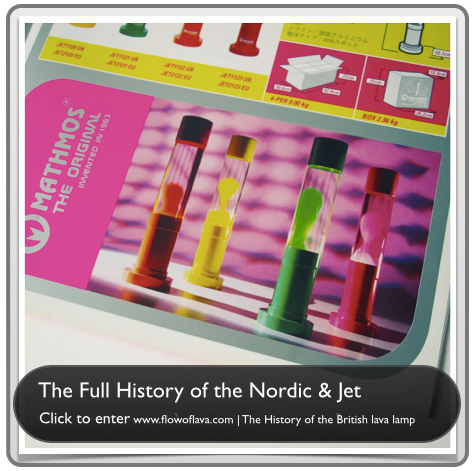 |
Special Feature | The History of the Nordic & Jet Lava Lamps One of the most popular glitter & lava lamps of all time is the Mathmos Jet. This 1990s, extremely popular and simplistic lava lamp actually has its roots in the past and can be traced all the way back to the 1960s. When Edward Craven Walker launched the Astro lamp, the world's first lava lamp, he went on to acquire other bottle shapes to create different types of lamps. The third major bottle type would be the Nordic tubular bottle type. These tubular bottles, were first used in Crestworth's Cosmos, the first export market lamp, that was loved in France and sold extensively by Decoverre (Crestworth's distributor in France). Then Crestworth would develop the Nordic De Luxe MK1, which is a beautiful design that featured the lamp floating on a cone shaped base. Crestworth then introduced a new version called Nordic De Luxe MK2, which replaced the cone shaped base for a simpler base design. In the early 1990s, the Nordic MK2 design would switch to a glossy black finish and become known as Jet. The Jet, Mathmos' entry level lava lamp would become exceptionally popular. At its peak in the later 1990s Mathmos offered sixteen different models of the Jet, six in black, six in white and four in a rainbow of colours. No other 1990s Mathmos lava lamp has ever been produced in such a high amount of options. Click on the image on the left to enter this section. |
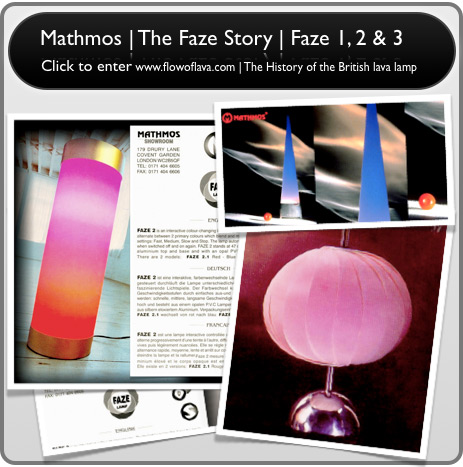
Special Feature | Mathmos Faze Story | Mathmos Faze 1, 2 & 3 In the 1990s, Mathmos developed a range of colour changing lights utilising bulbs and Mathmos' Faze technology. The first of such lamps was Faze 1, featuring a semi-spherical base with a bubble shade suspended on a pole from the base. The second version Faze 2 featured a tubular design and aluminium base and cap ends for a completely new look. Faze 3, took the Faze to a pyramid form, added a remote control for convenience and offered the option for sound to light colour phasing. Mathmos' Faze lamps are stunning and are a great piece of Mathmos' history. Click on the image on the left to enter the section.
|
Special Feature | Mathmos Display Stands Mathmos Lava Lamp display stands - In the 1990s, Mathmos developed their own display stands for their lava lamps to be used in shops and other retail spaces. From table top designs to floor standing examples, these eye catching Mathmos display stands, showed the Mathmos range of lava lamps to buyers and were a perfect way to showcase Mathmos. Click on the image on the left to enter the section.
|
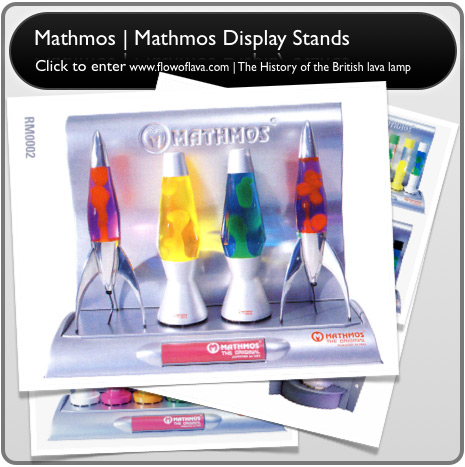
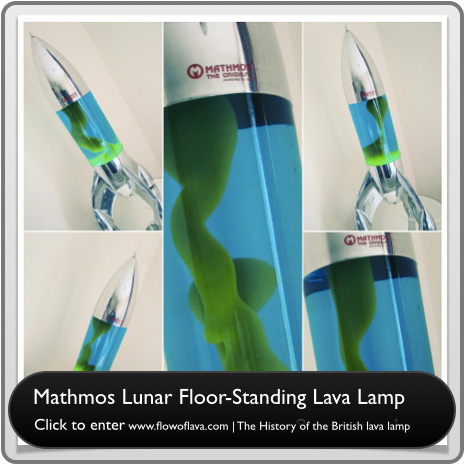
Special Feature | Mathmos Lunar Floor-Standing Lava Lamp Mathmos Lava Lamp display stands - In the 1990s, Mathmos developed their own display stands for their lava lamps to be used in shops and other retail spaces. From table top designs to floor standing examples, these eye catching Mathmos display stands, showed the Mathmos range of lava lamps to buyers and were a perfect way to showcase Mathmos. Click on the image on the left to enter the section.
|
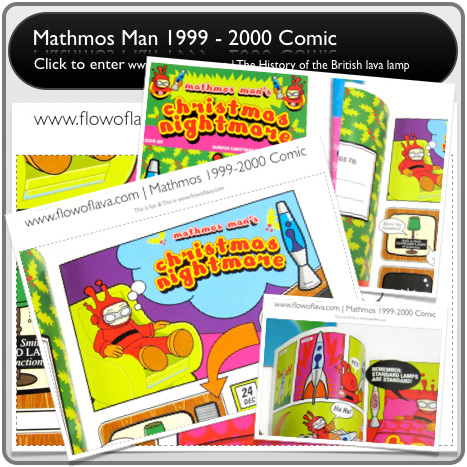 |
Exclusive Feature | Mathmos Man 1999 - 2000 Comic A mini Mathmos comic showing Mathmos Man's Christmas Nightmare. The graphics are so Mathmos late 1990s. Click on the image on the left to enter this section.
|
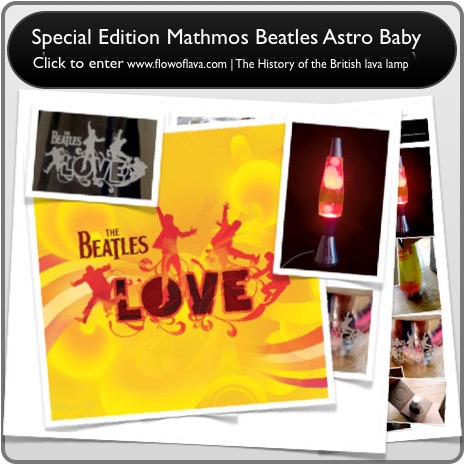 |
Exclusive Feature: Mathmos Astrobaby Customised for The Beatles' Love Album The Lava Lamp is an icon of the 1960s and so are The Beatles Both icons joined forces in 2006 to create a limited edition lamp to celebrate the release of The Beatles' Love Album which was released in 2006. This lamp was gifted only to select industry & media execs, and lamp has a customised emblem engraved into the aluminium base and is filled with a cool red lava-liquid which complements the yellow masterfluid nicely. Apart from the base being engraved the lamp is identical to an ordinary Mathmos Astrobaby lamp. It has been seen with the Yellow/Red Mathmos colour combination. Arguably one of the most elusive & desirable pieces of promotional Beatles memorabilia of recent times, and there were just 50 lamps made. A definite conversation piece with all the coolness and glam. Very funky. Please see the image assortment below. The item below is not owned by myself personally but it is considered to be extremely desirable to Beatles' collectors and of course Mathmos collectors too. Click on the image on the left to enter this section. |
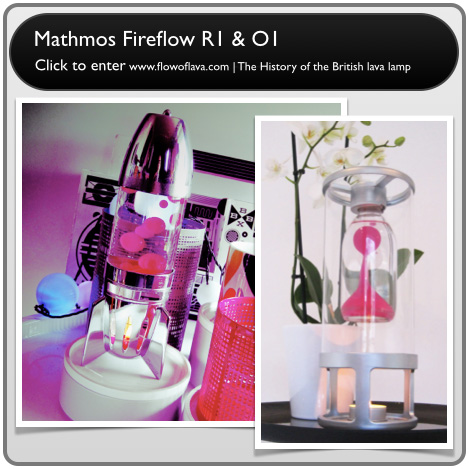 |
Mathmos Fireflow R1 & O1 | Mini Candle Powered Lava Lamp designs from Mathmos Launched in 2009 In 2009, alongside Mathmos' vintage lava lamp exhibition in London, Mathmos introduced a range of candle powered lava lamp designs known as Fireflow. R1 presented a silver/ gun metal finished rocket design and O1 presented a modern futuristic design. Early and original Fireflow colour combinations featured clear masterfluid due the lack of an electric bulb. Original colourways were: Clear/ Blue, Clear/ Pink, Clear/ Green, Clear/ Violet and Glitter. Clear/ Violet and Glitter colourways and the R1 gunmetal finish were retired. Subsequently all these colourways would be discontinued with the introduction of Violet/ Orange and Blue/ Yellow. Mathmos then introduced a copper version of Fireflow R1 and this saw the addition of Yellow/ Orange and Blue/ Pink. Fireflow R1 which was originally offered in silver and gun-metal finishes. The gun-metal finish would be retired and far later in 2018 a copper finish would be introduced.
Click on the image on the left to enter this section. |
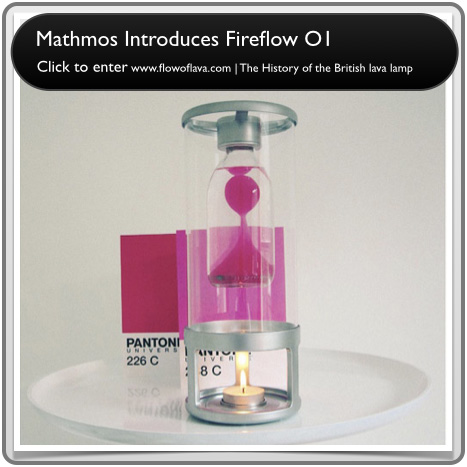 |
Mathmos Fireflow O1 | Candle Powered Lava Lamp design from Mathmos Launched in 2009 In 2009, alongside Mathmos' vintage lava lamp exhibition in London, Mathmos introduced a range of candle powered lava lamp designs known as Fireflow. R1 presented a silver/ gun metal finished rocket design and O1 presented a modern futuristic design. Early and original Fireflow colour combinations featured clear masterfluid due the lack of an electric bulb. Original colourways were: Clear/ Blue, Clear/ Pink, Clear/ Green, Clear/ Violet and Glitter. This section features the unboxing of the Mathmos Fireflow O1 candle powered lava lamp design ...
Click on the image on the left to enter this section. |
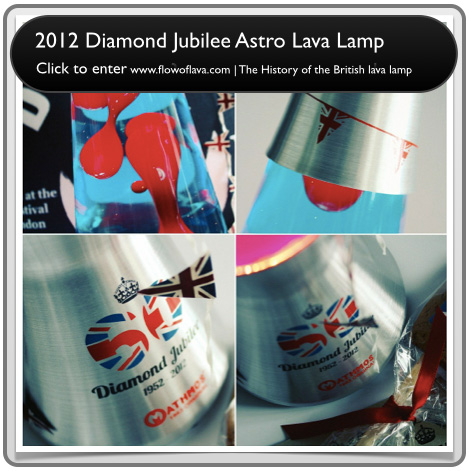 |
Mathmos 2012 | 2012 Mathmos Introduces 1952 - 2012 Diamond Jubilee Astro Lamp In late 2012, Mathmos created a limited edition certificated 1952 - 2012 Royal Jubilee Astro lamp with bunting decals on the cap and printing on the base.
Click on the image on the left to enter this section. |
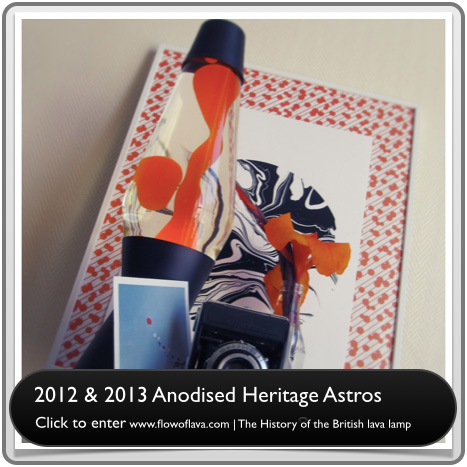 |
2012 & 2013 | Mathmos Introduces Anodised Heritage Astros In 2012, Mathmos introduced a brand new Astro in a matte black finish with two bottle options: Clear/ Black and Clear/ Orange. In 2013, Mathmos' 50th Anniversary, saw Mathmos expand on this concept and present a Astro Heritage line of Astro Lamps. These special Heritage Astro lamps featured the option of Black, Blue or Gold bases which would be anodised to a matt finish. These lamps featured various colour options and finishes. As part of Mathmos' 50th Anniversary celebrations Mathmos would display a giant four column lava lamp displayed at The Royal Festival Hall in London. Mathmos Astro also created a limited edition Mathmos lava lamp for the 50th Anniversary.
Click on the image on the left to enter this section. |
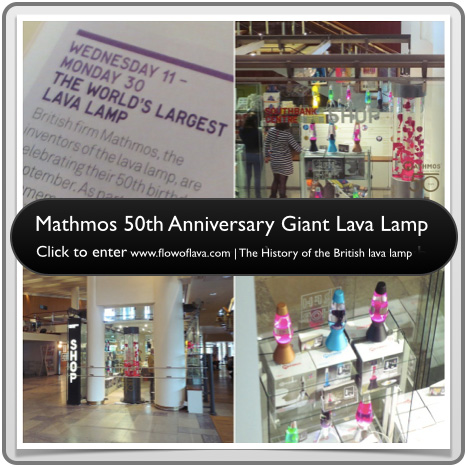 |
2013 | Mathmos 50th Anniversary Southbank Centre | Royal Festival Hall Giant Lava Lamp As part of Mathmos 50th Anniversary celebrations, Mathmos introduced a very special limited edition of the Astro lamp in 2013 and a whole selection of events and parties to celebrate the 50th anniversary of the Original Mathmos lava lamp. Mathmos created a special edition Astro featuring a matt gold base, a clear/red bottle featuring a gold decal etched into the bottle and a sash attached to the base. This limited edition Astro was first displayed at Aria, London based design store. Also Mathmos created the world's largest lava lamp featuring four giant columns which can be seen below, this was displayed at The Royal Festival Hall/ Southbank Centre in London.
Click on the image on the left to enter this section. |
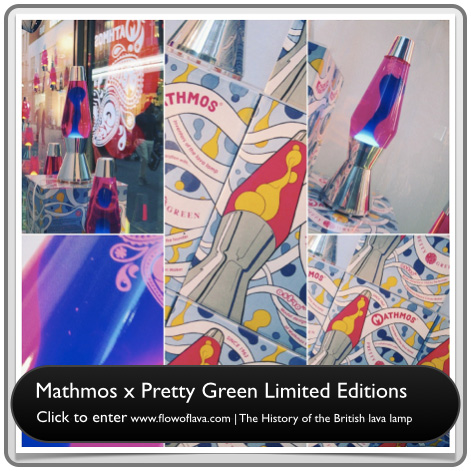 |
Mathmos x Pretty Green | Limited Edition Astro Lava Lamps in Special Colourways & Packaging ... September 2017 Editions: Pink & Yellow, Pink & Blue Colourways ... Limited Edition Un-numbered. October 2018 Editions: Blue & Orange, Blue & Pink Colouways ... Limited Edition of 400 lamps with numbered box. Numbers 1-200 are reserved for Blue/ Orange models and 201-400 are reserved for Blue & Pink. In Autumn 2017, Mathmos in partnership with fashion brand Pretty Green introduced a range of limited edition Astro lamps. These Astro lamps featured beautiful packaging with hand-drawn illustrative artwork, each bottle had the Mathmos logo and Pretty Green logo etched at the top of the bottle, and these designs featured beautiful limited edition colour options. Following the first colloboration in 2017, Mathmos and Pretty Green would return in 2018 to create a second limited edtion, limited to 400 pieces, each being numbered with a sticker placed on the product's packaging. Enjoy the images which show the launch of these beautiful special edition Astros are Pretty Green's store on Carnaby Street in London. This was also the first sighting of Mathmos' Neo Wall wall-mounted lava lamps which were part of the display. Click on the image on the left to enter this section. |
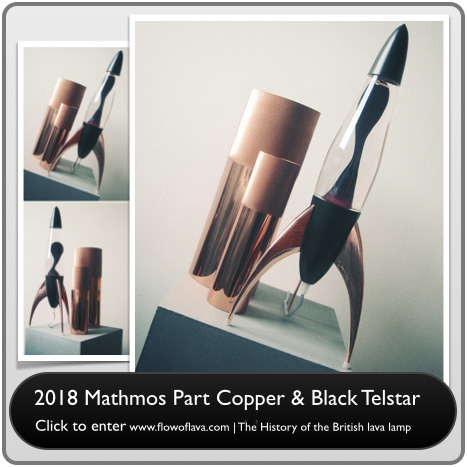 |
Mathmos Telstar Addition | 2018 Mathmos Part Copper & Black Finished Telstar In 2018, Mathmos introduced a new version of their beautiful Telstar lava lamp design, in a part black and part copper finish, combining two popular finishes from their Astro Heritage ranges. This part finishing of Telstar is reminiscent of the original two tone part-anodised Telstars that were launched by Mathmos in the early 1990s in 1993. This edition features a matt black cap and a matt black base cone with bright copper anodised fins. This also featured Mathmos' new Barbarella inspired artwork packaging, which is beautiful.
Click on the image on the left to enter this section. |
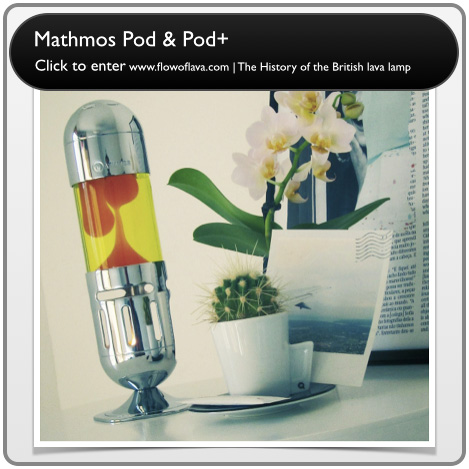 |
Mathmos Pod & Pod+ | Mini Candle Powered Lava Lamp designs from Mathmos Launched in 2019 In October 2019, Mathmos two new candle powered lava lamp designs, under the name Pod & Pod+. These two designs joined Mathmos' Fireflow R1 rocket candle powered lava lamp design, offered at the time in silver and copper finishes. Pod is virtually the same size as Fireflow R1 whilst Pod+ is taller due to its pedestal style base which is reminiscent of Crestworth's Cosmos design. Pod and Pod+ featured the existing Mathmos candle colour ways such as: Violet/Red, Blue/Yellow, Yellow/Orange and Pink/Blue. We love them both and they are perfect for camping and when you need a lava lamp but don't need the wire. Enjoy the images which show the unboxing of the Mathmos Pod and Pod+ lava lamps and power up. Early versions featured numbered packaging of the first 100.
Click on the image on the left to enter this section. |
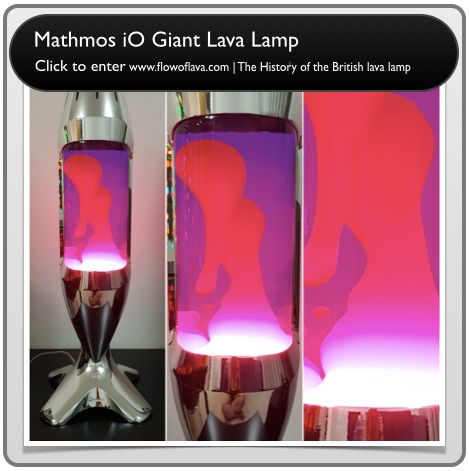 |
Mathmos iO | The Giant Floor Standing Lava Lamp by Mathmos launched in 2019 The Mathmos iO giant lava lamp was designed over a period of several years and launched in Autumn of 2019. iO is named after Jupiter's moon, which according to NASA, the most volcanically active spot in the Solar System, it even has lakes of molten silicate lava on its surface. This is the successor to the much loved giant Mathmos Lunar floor-standing lava lamp of the the 1990s and the very early 2000s. iO sits at 78cm tall and was designed by Mathmos in collaboration with industrial designers J.Coles and J.French. The design echoes the safety features from the Mathmos Neo with an interlocking structure, reminiscent of the early 2000s Mathmos Jetstream. This structure allows the cap to join the base via a set of running side bars to increase safety of the lamp. It can also be fixed down onto a surface if required. iO is the first Mathmos lava lamp to be powered by linear halogen bulbs, specifically 80w R7 78mm linear halogen capsule bulbs. Three were included with each lamp. Original colour combinations launched in 2019 with Mathmos iO are: Blue/ Green, Yellow/ Orange and Violet/ Red. This is a stunning Mathmos lava lamp that will go on to become the new collectable giant lava lamp just like the Mathmos Lunar. Click on the image on the left to enter this section. |
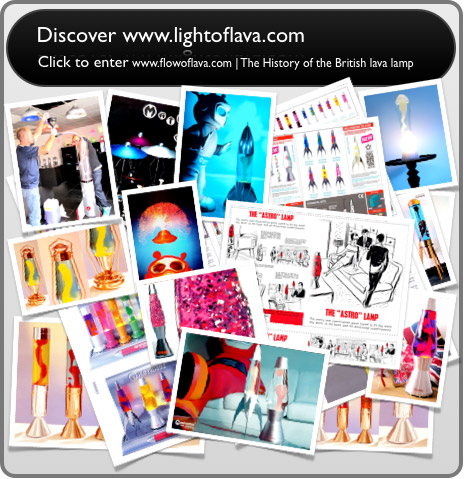 |
www.lightoflava.com | The Mini Timeline dedicated to the history of the British lava lamp For even more information, vintage photos, vintage lava lamp history please see www.lightoflava.com. www.lightoflava.com provides a mini gallery of five pages dedicated to the history of the lava lamp, you can see vintage lava lamps from the 1960s, 1970s and the revival of the lava lamp in the 1990s and beyond with the very popular Mathmos Models. Lightoflava.com just like www.flowoflava.com provides a timeline to the wonderful British Mathmos lava lamps and contemporary lighting products. Click to visit www.lightoflava.com
|
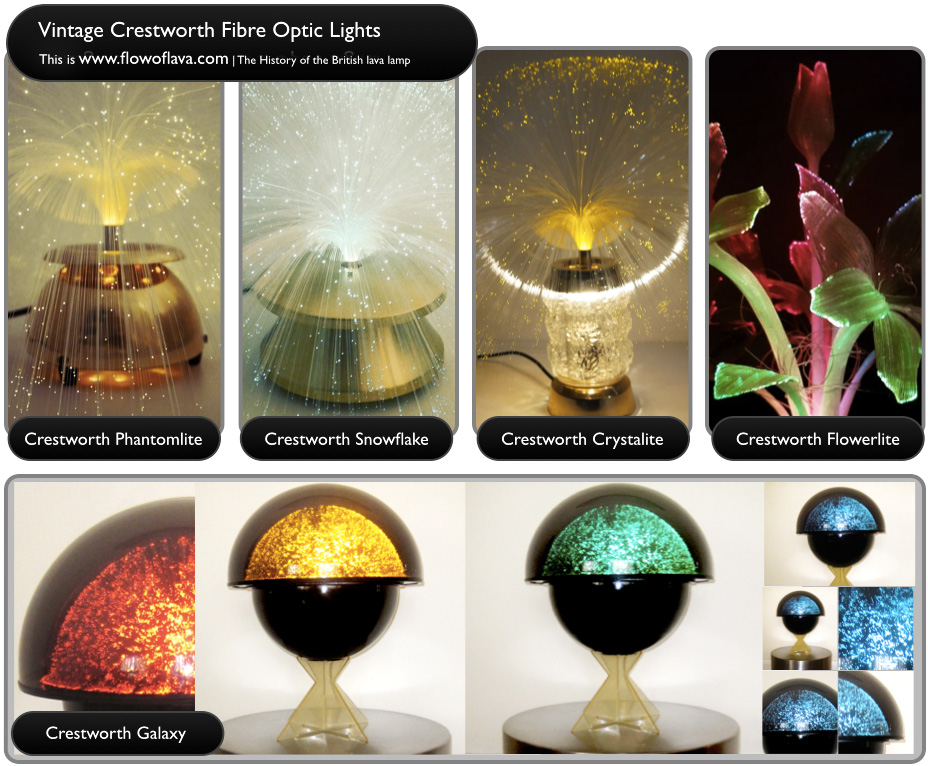
Spotlight on Vintage Crestworth Fibre Optic Lights | Phantom Lite | Snowflake | Crystalite | Flowerlite | Galaxy. After Crestworth invented the Astro lava lamp, and created a range such as: Astro, Astro Mini, Astro Nordic & Astro Lantern, they went on to create beautiful glitter lamps such as: Glitter Lite and The Living Jewel. Crestworth would also go on to introduce a beautiful range of fibre optic lights starting with Galaxy and Phantomlite, then subsequently other designs such as: Crystalite, Snowflake and Flowerlite. Click on a Crestworth fibre optic lamp to find out more ... |
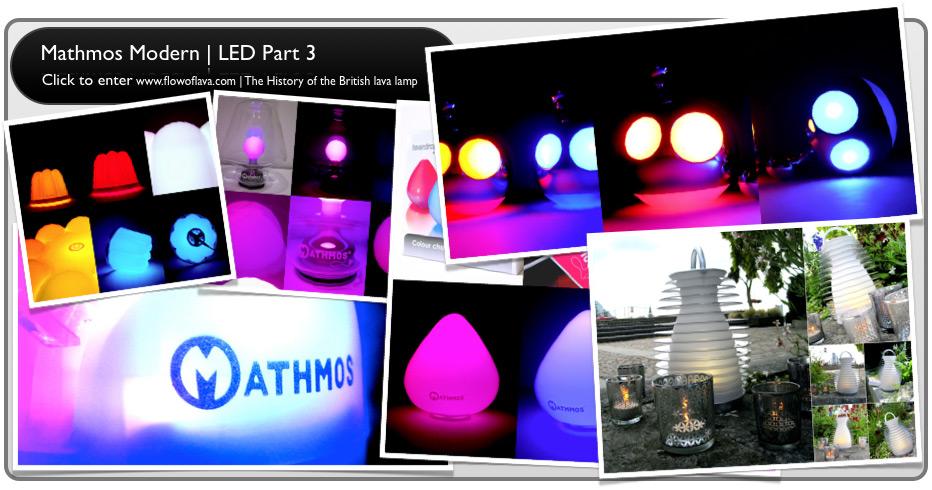
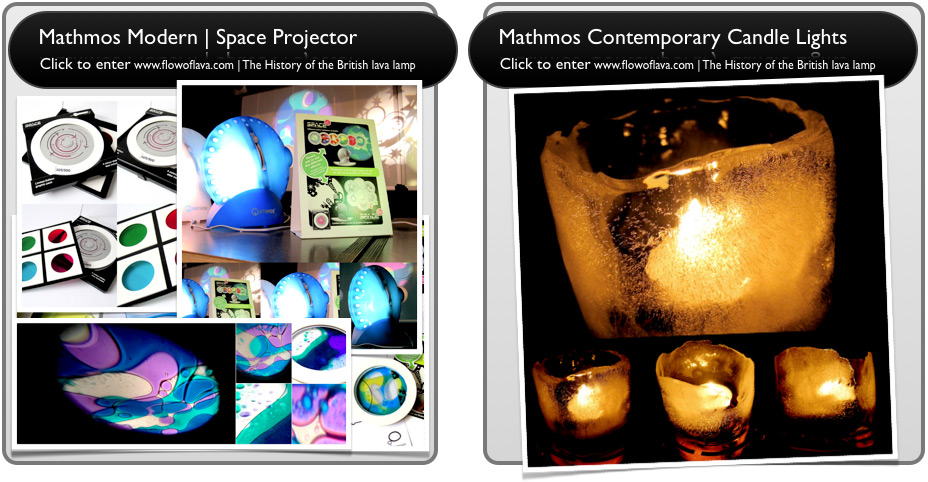
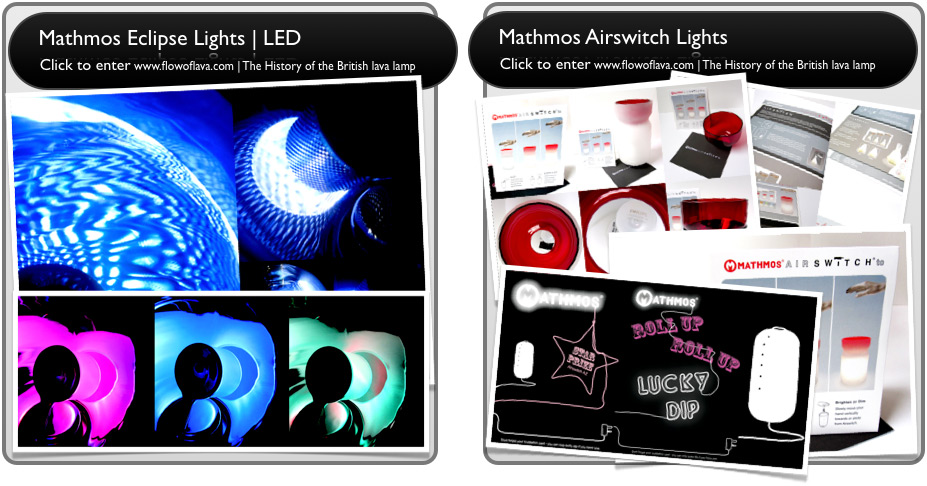
In the 2000s, Mathmos embarked on creating the next generation of ambient lighting with the introduction of kinetic lights that utilise LED technology starting with the Mathmos Bubble, then followed by the Mathmos Tumbler and then by the Mathmos Aduki, the very first three Mathmos Mobiles. These first three products acted like mobile phones, being splash-proof, cordless and also able to work just about anywhere. Mathmos also moved into white functional light with the introduction of their magical Airswitch technology. In the 2006, Mathmos entered the world of Candlelight with unique designs that re-imagined what candle light could be. Mathmos also added a new dimension to their popular Space Projector with the introduction of graphic wheels. Take look below to see the evolution of the Mathmos Modern products ... |
 Mathmos Modern | Mathmos LED Ambient Lights | Mathmos Space Projector | Mathmos Candle Light | Mathmos Airswitch Lights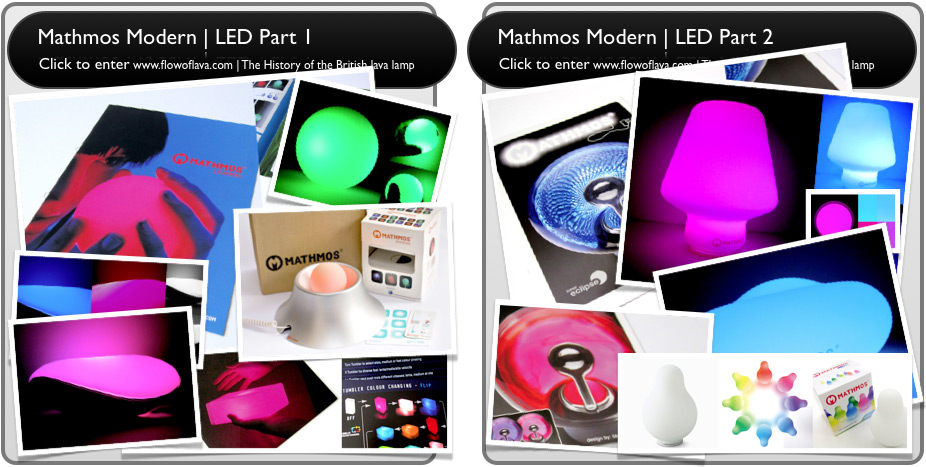
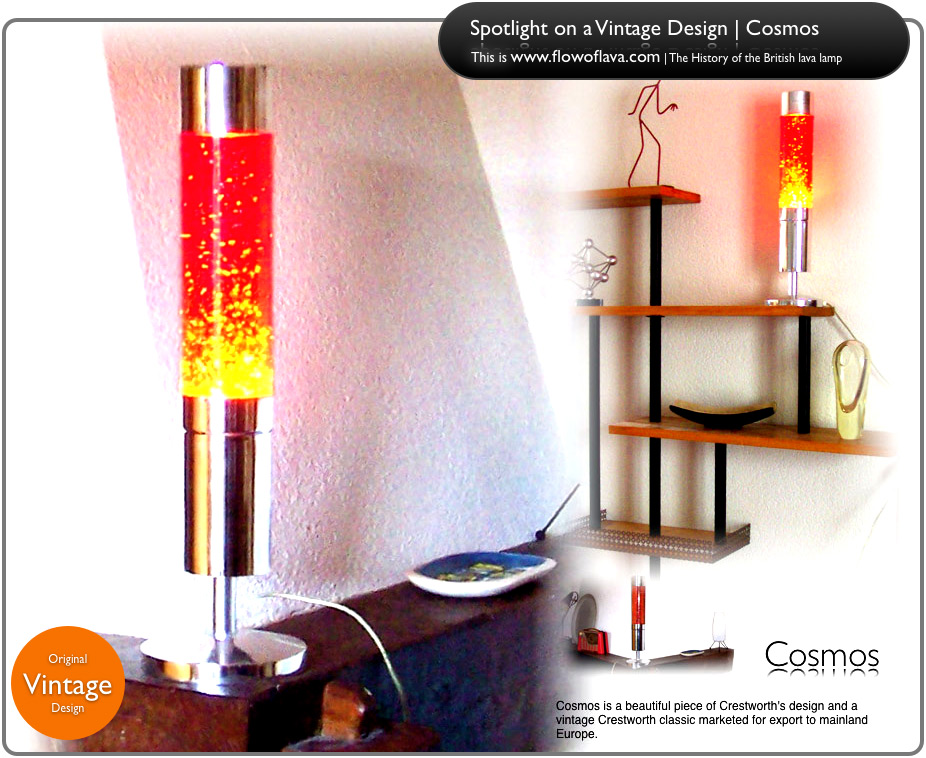
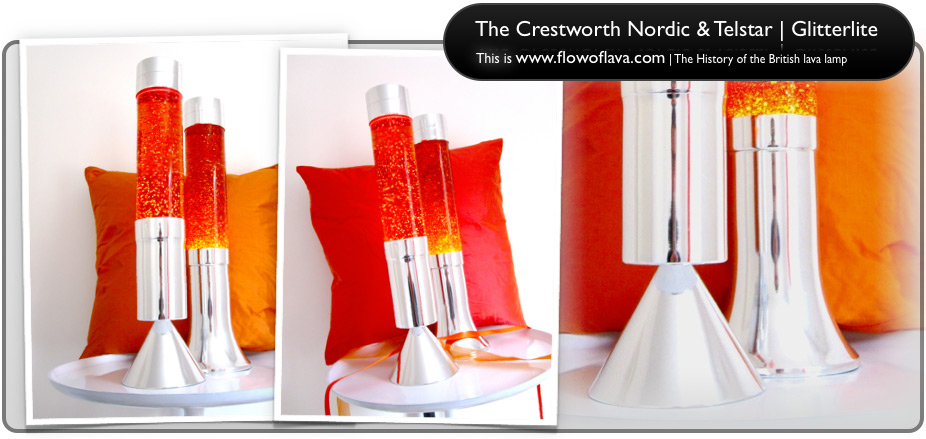
Spotlight on Vintage Designs | Cosmos | Nordic | Telstar Below one can see three vintage Crestworth designs, all featuring Crestworth's Glitterlite formulations and Crestworth's Nordic tubular bottle design. The first featuring a pedestal base is known as Cosmos, and was seen extensively in Crestworth's export markets such as France. This beautiful design elevates the bottle and creates a stunning beautiful effect. Crestworth's Nordic design features a beautiful base design that elevates the bottle up and sits on a cone shape base to create a stunning look. Crestworth's Telstar featuring a flared base was Crestworth's entry level lamp but also offers a stunning vintage design. |
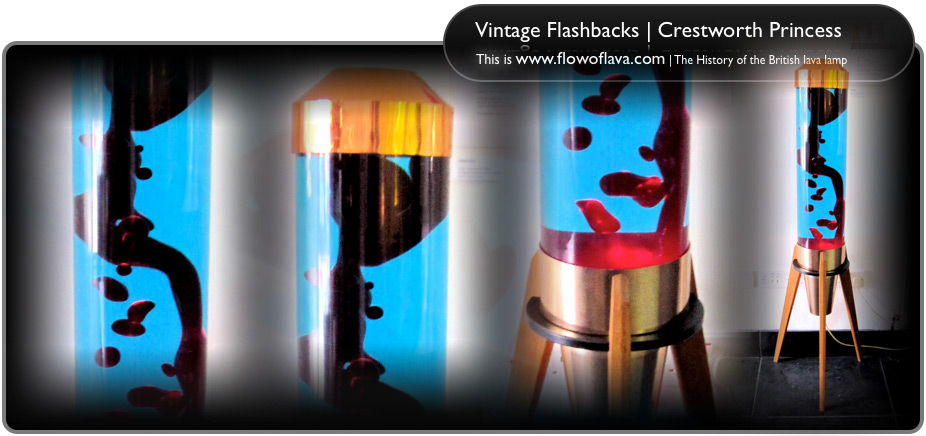
Crestworth Princess| Stunning Floor Standing Giant Lava Lamp | The fabulous floor standing giant lava lamp design created by Crestworth and seen in vintage Doctor Who episodes and vintage tradeshow images. The Princess lava lamp was a wonderful show piece at Mathmos' vintage lava lamp exhibition in 2009, commemorating over four decades of lava lamp history. |
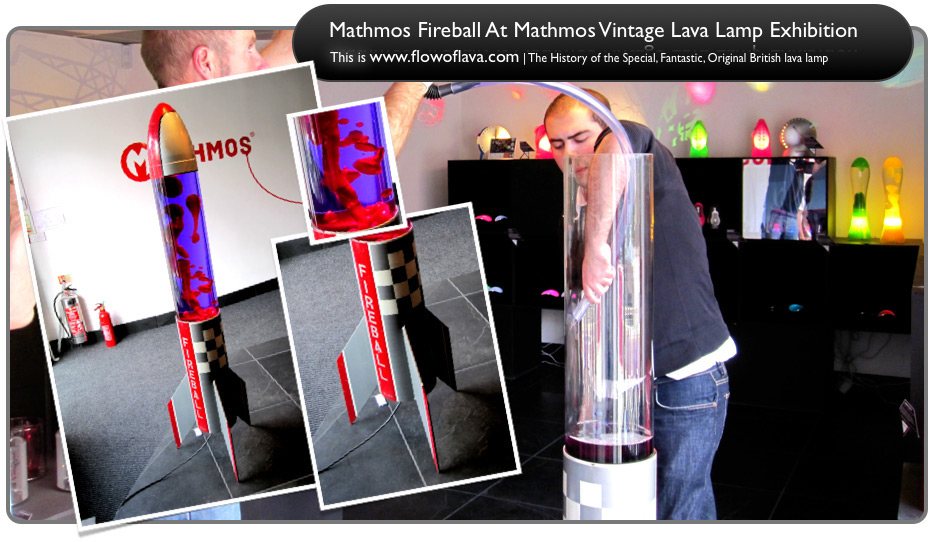
Mathmos Fireball| Stunning Floor Standing Giant Rocket Lava Lamp | The early 1990s fabulous floor standing giant lava lamp design created by Mathmos, Fireball was seen at the Mathmos Vintage Lava Lamp Exhibition in 2009. This stunning lamp requires a special liquid formulation to make it operate, which needs to be filled super slowly and with attention to detail. Fireball is stunning. |
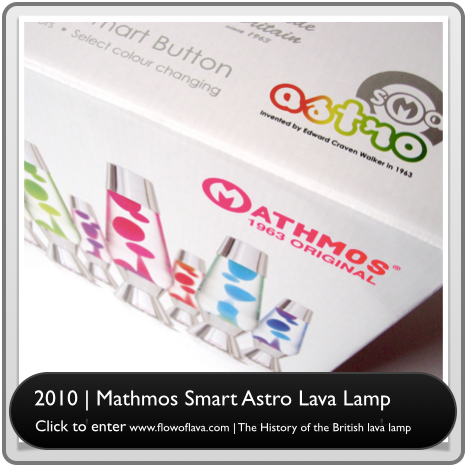
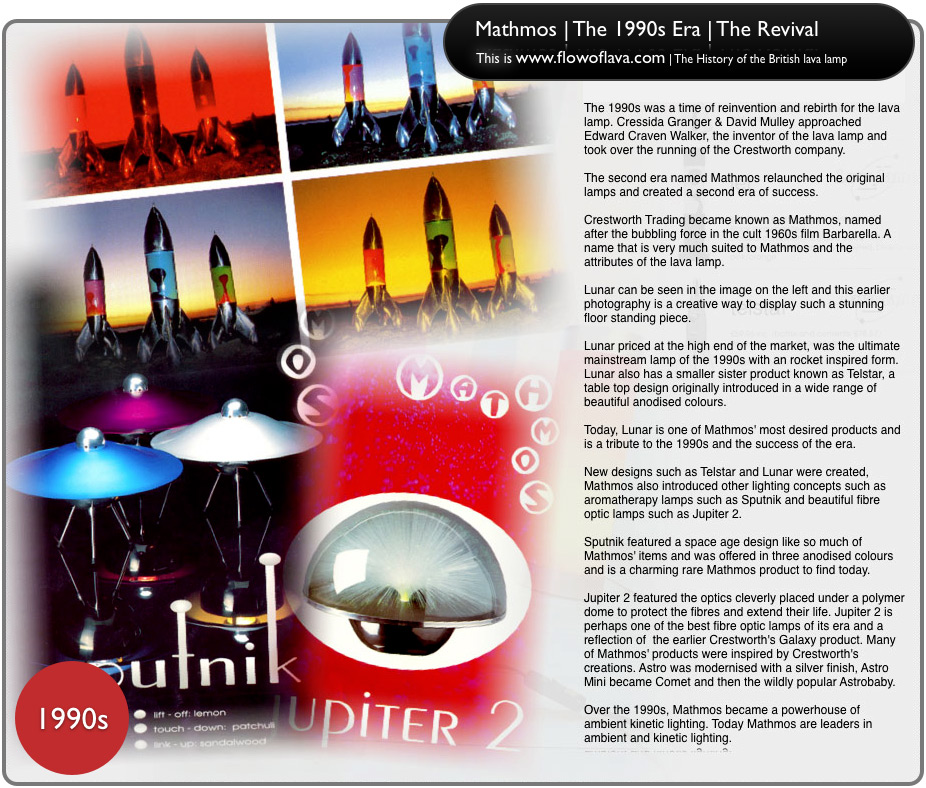
Mathmos | The 1990s Era | The 1990s saw a masssive revival in the original lava lamp. Mathmos re-launched older models, refreshing finished and colours inside the lava lamp bottles. Mathmos also launched new models such as Lunar and Telstar. Classic Mathmos 1990s products include the iconic Astro, Astro Baby, Glitter Baby, Jet, Telstar, Lunar, Fibre Space and so much more. |
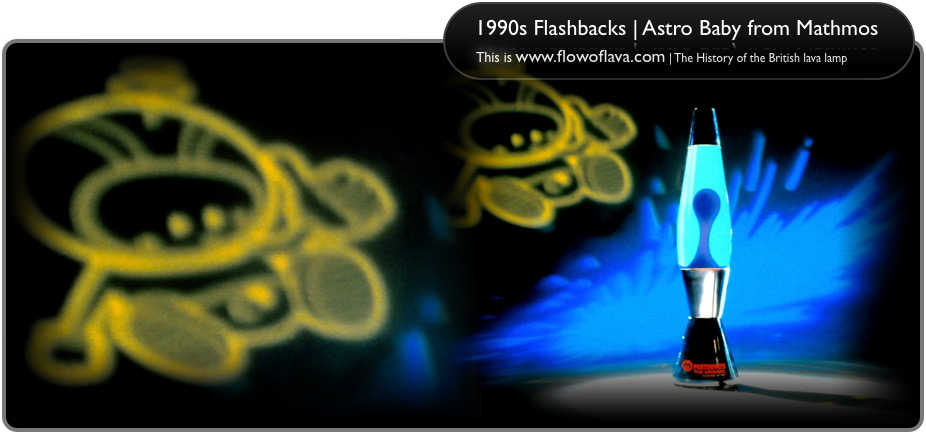
Mathmos Astro Baby | Mathmos' Astro Baby is the modern version of the Crestworth Astro Mini, keeping the same timeless form, lines and iconic bottle shapes as the original, Astro Baby was one of the the 1990s' most popular lava lamps and is a very beautiful design. Astro Baby from Mathmos is the sleek, smaller alternative to the iconic Astro. Just like the Astro in the 1990s, Astro Baby featured a silver finish instead of the traditional copper finish seen in the vintage years with Astro Mini. |
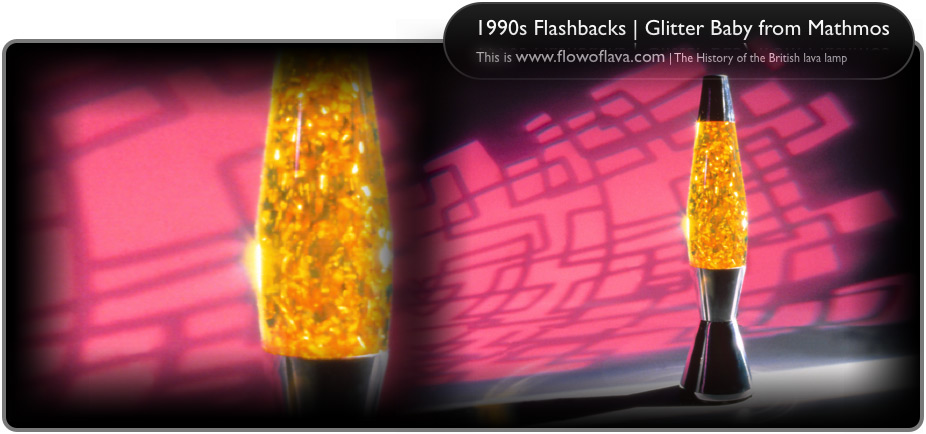
Mathmos Glitter Baby | Glitter Baby from Mathmos is the sister product to Astro Baby, replacing the lava liquids with Glitter to create a dazzling and sparkling effect within. Simply Dazzling! |
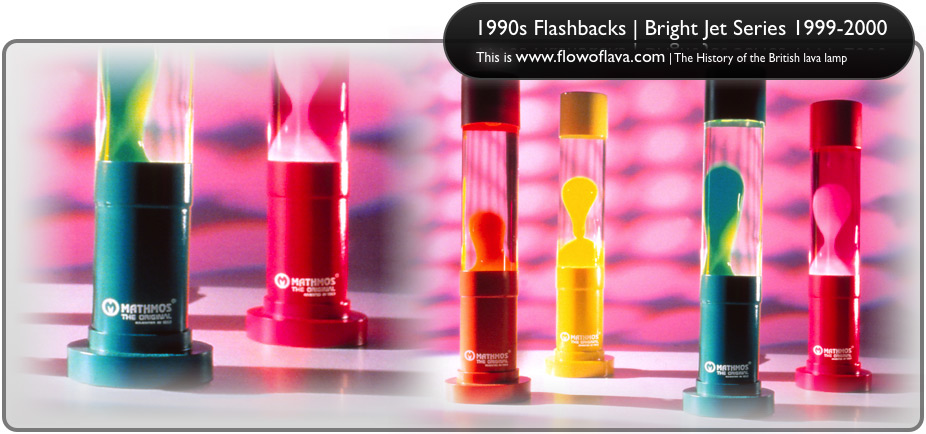
Mathmos Jet (Bright Series) | In the late 1990s Mathmos introduced a new line of plastic Jets in colours: Yellow, Green, Orange & Pink. These wonderful Mathmos Jets in colours sometimes described as the "Bright Jets" offered matching colourways and were an exciting advancement in the Jet design. These lamps once again were very popular and sat side by side with Mathmos' White and Black plastic based Jets. |
Mathmos Fluidium by Ross Lovegrove | Ross Lovegrove's Fluidium changed the way people looked at lava lamps and offered a completely radical new form for the lava lamp in 2000. Offered in Opal, Orange, Yellow and Green, Fluidium is a stunning design. |
Assistance & Crestworth Rare Models | www.flowoflava.com | The Growing Archive The very best done to bring you the most accurate timeline based on all the brochures and information we could find from collectors and from our personal collections. If you have an information regarding Crestworth during the 80s or any information that is not listed on the site, please email us at astrohistory@googlemail.com. If you were an employee from the Crestworth or Mathmos time, we would love to hear from you, regarding your experiences at the company. If you have Crestworth/ Mathmos collection we would love to feature your lamps on the site. Just pop us an email, we love featuring photos. All feedback is helpful and would be appreciated. Below is a list of rare products that we would appreciate any information regarding. Thank you. Princess, Fireball (lava), Giant (lava), Mistrolite (giant and astro base type), Table lamps (Mk1 and Mk2) Lamps featuring a shade, Cannon timer (novelty ornamental liquid timer), Wall Mounted Crestworth products (lava/glitterlite copper/silver), Twiggy (flexible all purpose lamp), Leatherette sticky sleeve (for living jewel bottles) Early Astro designs (2 part open base first design) |


You are browsing www.flowoflava.com, a site dedicated to the history, heritage and nostalgia of the Original Mathmos Astro Lava Lamp. Created by Anthony Voz. Thank you for visiting www.flowoflava.com